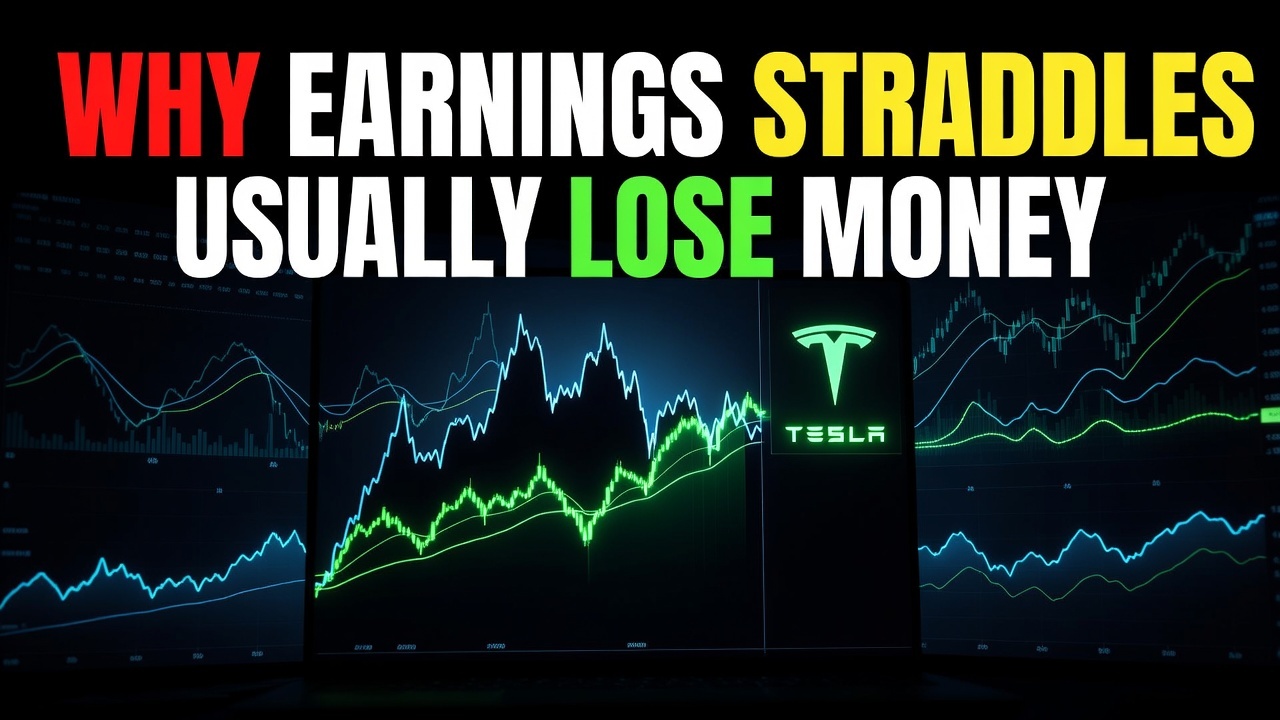
Why Earnings Straddles Usually Lose Money

📊 November 19, 2026
- Buying earnings straddles is a losing proposition because implied volatility crush routinely drains more premium than delta gains can recover.
- The critical error is paying peak volatility pricing to enter a trade that demands an abnormal, statistical outlier move just to break even.
- Instead of buying expensive pre-earnings premium, wait for the post-earnings opening range breakout when volatility has already normalized.
— Ben, Find Better Trades
Buying an earnings straddle requires purchasing both an at-the-money call and an at-the-money put immediately before an earnings report, banking on a massive swing in either direction. Why earnings straddles usually lose money comes down to the mechanics of volatility crush: the expected move is already fully priced into option premiums before you place the order. When the numbers drop, implied volatility instantly collapses, destroying the extrinsic value of both contracts before your delta has any chance to deliver a profit.
The tool I use for this: Gravity Zone Indicator. Gravity Zone detects hidden institutional accumulation on TradingView — so you’re in the breakout while retail is still waiting for confirmation. See Gravity Zone In Action →
Retail traders flock to this strategy because it feels like a cheat code that lets you ignore directional bias. You convince yourself that a loud stock will move violently enough to cover both sides of the spread. That assumption is why options market makers stay consistently profitable.
Why Everyone Gets This Wrong
The conventional retail playbook tells you to find an active stock, buy the straddle 15 minutes before the closing bell, and sit back while the numbers trigger fireworks. Traders assume that if a stock moves 5% or 6% on earnings, they are guaranteed a payout. That is an expensive illusion built on ignoring vega risk.
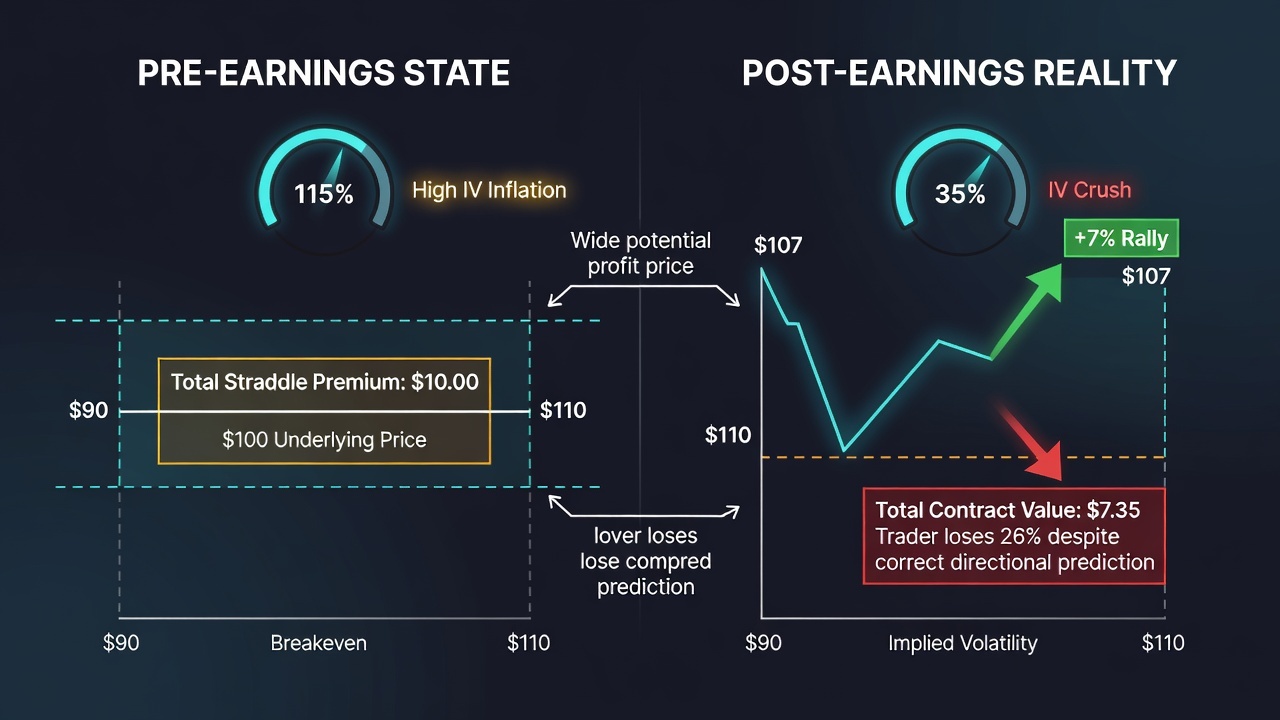
Consider a stock trading at exactly $100 per share with earnings scheduled after the closing bell. An at-the-money $100 strike call costs $5.00, and the at-the-money $100 strike put costs $5.00, setting the total cost of the straddle at $10.00. That pricing means your upper breakeven is $110.00 and your lower breakeven is $90.00, requiring a massive 10% move overnight just to reach zero profit.
Suppose the company reports decent numbers and the stock gaps up to $107.00 at the opening bell, representing a respectable 7% rally. At the same moment, the front-month implied volatility drops from 115% down to 35% because the catalyst event has passed. Your $100 put collapses to $0.05, while the $100 call retains its $7.00 of intrinsic value plus perhaps $0.30 of extrinsic premium. You spent $10.00 on the position and sell it for $7.35, locking in a painful 26% loss despite picking an enormous directional gap.
Market makers understand expected move mathematics better than retail buyers do. They price the straddle right at the edge of probable standard deviations, turning your trade into an extreme tail-risk gamble.
What Actually Works
If you want to trade earnings without getting pulverized by volatility collapse, trade the aftermath rather than the anticipation. Let the market absorb the report, let the implied volatility collapse across the board, and execute a 15-minute post-earnings opening range breakout the following morning. This approach eliminates vega collapse entirely and allows you to trade clean directional momentum using cheap contracts.
When the market opens at 9:30 AM, mark the absolute high and low of the first 15-minute candle. If the price breaks above that high on volume, buy an out-of-the-money call with a delta around 0.40; if it breaks below the low, buy a corresponding put. Your stop loss sits strictly at the midpoint of that 15-minute candle, keeping your risk tightly defined.
| Strategy | Vega Exposure | Required Move | Execution Window |
|---|---|---|---|
| Long Straddle | Extremely Negative (Crush) | Often 8% to 12%+ | Pre-Market Close |
| Post-Earnings ORB | Neutral / Normalized | Directional Trend Only | 9:45 AM Next Day |
| Iron Condor (Credit) | Positive (Benefits from Crush) | Inside Implied Move | Pre-Market Close |
For traders who insist on placing orders before the release, take the other side of retail volume. Sell defined-risk premium using iron condors placed outside the calculated implied move when IV Rank exceeds 85. That puts time decay and volatility crush on your balance sheet instead of working against you.
When Buying an Earnings Straddle Can Still Make Sense
Buying an earnings straddle makes technical sense under one rare market condition: an acute implied volatility mispricing. This occurs when options chains fail to price in a compounding secondary catalyst, such as an unresolved antitrust regulatory verdict scheduled concurrently with an earnings call.
If front-month implied volatility is trading significantly below the asset’s trailing 20-day historical realized volatility, options are objectively underpriced. Under those specific conditions, a standard market reaction can comfortably exceed the pricing priced into the strikes, giving long premium a legitimate edge.
🎯 Want Setups Like These? The Big Dipper Does the Scanning For You.
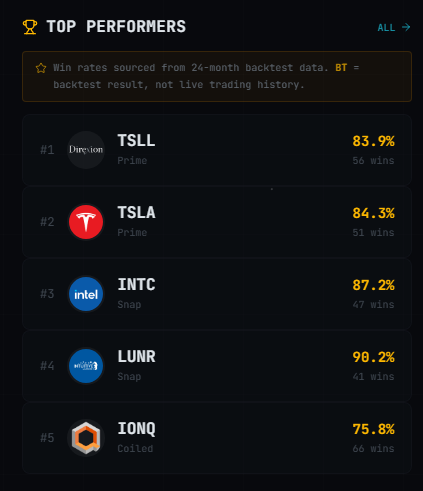
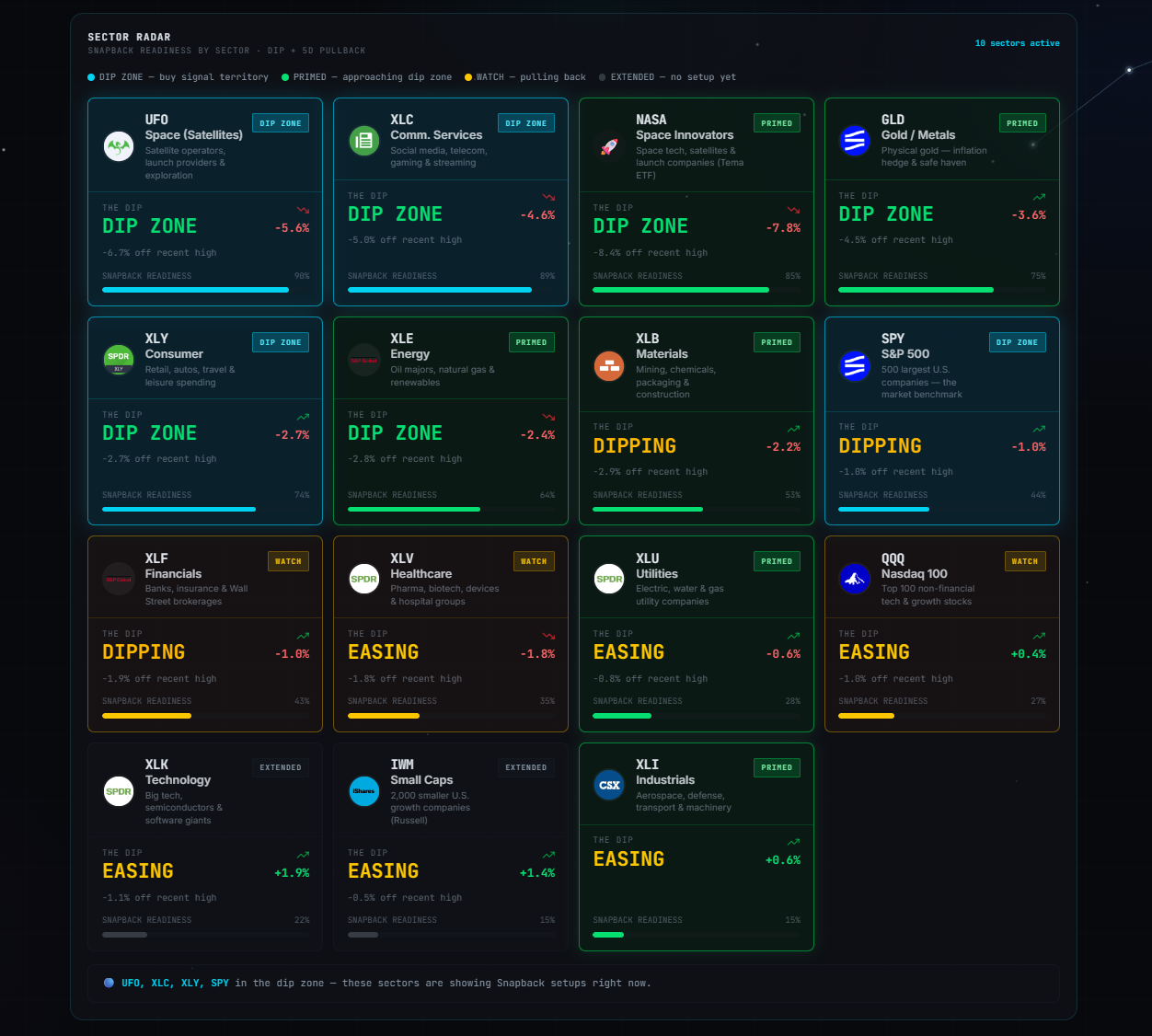
Every morning the Big Dipper delivers curated DIP ZONE trade ideas — stocks already at high-probability entry levels, with targets pre-set. No guessing, no scanning. Just setups.
From Find Better Trades
Consistent Income. Any Market Direction.
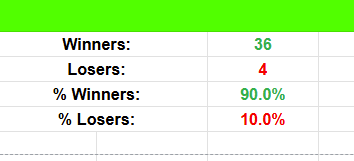
A low-risk debit spread every Thursday, built to make steady returns whether the market runs up, down, or sideways.
Earnings Straddle FAQ
Q: What is volatility crush on an earnings straddle?
A: Volatility crush is the rapid, sharp collapse in an option’s implied volatility that occurs immediately after a known event like an earnings report is announced. Because uncertainty disappears once the figures are public, extrinsic option premium drops instantly, dragging down the overall market value of both calls and puts.
Q: How do you calculate the breakeven on an earnings straddle?
A: Take the total price paid for both the call and put combined, then add that amount to the strike price to find your upper breakeven, or subtract it from the strike price for your lower breakeven. If you pay $8.00 total for a $100 strike straddle, the stock must trade above $108.00 or below $92.00 by expiration for the trade to clear a profit.
Q: Is it safer to buy a strangle instead of a straddle for earnings?
A: No, buying a strangle is often worse because both out-of-the-money legs contain zero intrinsic value and rely entirely on extrinsic premium. When volatility crush hits after the announcement, an out-of-the-money strangle frequently loses 80% to 90% of its total value unless an unprecedented price movement occurs.
📈 Want More? Join Our Free Trading Community
- Trading Strategy Guides Telegram — daily strategy tips and market insights
- Find Better Trades Telegram — free trade signals delivered to your phone
- Find Better Trades on YouTube — live trade breakdowns and tutorials