Calendar Spreads: Trading Time Decay Between Two Expirations

📚 Options Strategies, Step by Step — Part 9 of 30
- Part 1: The Bull Call Spread: A Cheaper Way to Bet on a Rise
- Part 2: The Bear Put Spread: Profiting From a Drop With Defined Risk
- Part 3: Bull Put Credit Spreads: Getting Paid to Be Right on Direction
- Part 4: Bear Call Credit Spreads: Selling Premium Above Resistance
- Part 5: Managing Credit Spreads: Closing Early at 50% Profit
- Part 6: The Iron Butterfly: When You Expect a Stock to Pin a Price
- Part 7: The Reverse Iron Condor: Profiting From a Breakout
- Part 8: Short Straddles and Strangles: The Risk Nobody Explains
- Part 9: Calendar Spreads: Trading Time Decay Between Two Expirations (you are here)
⚡ Key Takeaways
- A calendar spread involves buying a longer-dated option and selling a shorter-dated option at the exact same strike price.
- The trade profits because the near-term option loses value to time decay faster than the back-month option.
- Your maximum risk is strictly capped at the net debit paid to open the trade.
— Ben, Find Better Trades
A calendar spread is an options strategy where you buy a longer-dated option and sell a shorter-dated option at the very same strike price. Most beginners think you can only trade options along a single expiration date, which causes them to miss out on the difference in decay speeds between months. Welcome to Part 9 of our series, where we leave single-expiration vertical spreads behind and learn how to trade time itself.
What Is a Calendar Spread in Options Trading?
A calendar spread, also known as a time spread or horizontal spread, is an options position built by pairing two contracts with identical strike prices but different expiration cycles. You purchase a long-term option in a future month and sell a short-term option in an earlier month.
Both legs of the trade use the exact same strike price and the exact same asset. Because longer-dated options have more extrinsic value than near-term options, buying the back month and selling the front month will always result in a net debit to your account.
Think of a calendar spread like a real estate sublease. Imagine you lease an apartment for an entire year at a fixed rate, and then you rent out spare bedrooms on short weekend bookings. You hold the long-term contract while continuously collecting premium from short-term turnover.
The goal of the trade is simple: you want the underlying stock to hover near your chosen strike price as the near-term expiration approaches. This allows the short contract to bleed out extrinsic value rapidly while your long contract preserves the bulk of its worth.
If the stock stays pinned right near your strike price on front-month expiration day, the short option expires worthless. You are left holding a valuable back-month option that cost you very little out of pocket, giving you multiple ways to take profit.
How Theta Decay Powers the Calendar Spread
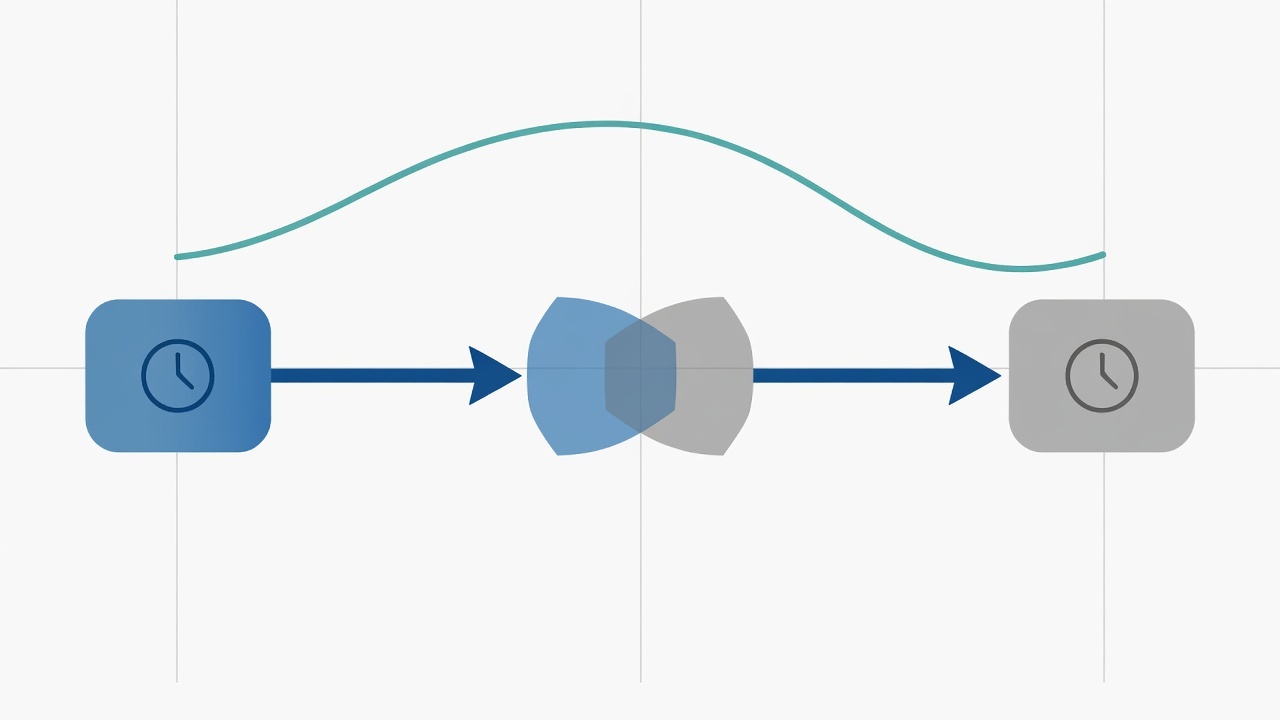
Theta decay measures the daily drop in an option contract price simply due to the passage of time. This decay is not linear; instead, it accelerates aggressively during the final 30 to 45 days before an expiration date.
A contract expiring in 14 days loses its remaining time value at a much faster pace than a contract expiring in 90 days. In a calendar spread, you turn this mathematical asymmetry into your primary source of edge.
Because you are short the front-month contract, its rapid theta decay works directly in your favor every day the market is closed or quiet. Meanwhile, your long-dated option decays at a crawl, safely insulated from that late-stage acceleration.
Each day that passes without a massive move in the underlying asset widens the relative value gap between your two options. That widening gap represents the profit accrued by the overall spread.
Here is how the structural forces behind both legs interact across your holding period:
| Spread Leg | Expiration Cycle | Theta Decay Speed | Position Goal |
|---|---|---|---|
| Short Option (Sold) | Front Month (14-30 DTE) | Accelerated / Fast | Expires worthless or buy back cheap |
| Long Option (Bought) | Back Month (45-90 DTE) | Subdued / Slow | Retains extrinsic value and volatility |
By capturing the difference between those two decay rates, you build a setup that wins without demanding a dramatic price move from the stock.
Call Calendar vs Put Calendar: Which One Should You Pick?
A calendar spread can be built using either call options or put options, and both variations share an almost identical risk profile when structured at the money. A call calendar uses two calls, while a put calendar uses two puts at the same strike.
When you set the strike price equal to the current stock price, both setups behave as neutral, income-generating plays. The theoretical difference lies primarily in how the options market prices skew and borrowing costs.
Put options often carry higher implied volatility due to downside panic hedging among institutional investors. Selling elevated implied volatility in the front-month put while buying slightly cheaper relative volatility in the back month can sometimes offer a pricing advantage.
On the flip side, call calendars avoid assignment risk driven by dividend payments. If a stock pays a dividend before the front-month expiration, deep short call holders risk early assignment, making call calendars safer when placed out of the money or on dividend-free stocks.
For most liquid exchange-traded funds and major equities, you can use calls or puts interchangeably if your strike is at the money. I generally default to calls when I lean slightly bullish and puts when I lean slightly defensive.

A Worked Example of a Long Call Calendar Spread
To see how the numbers play out in an actual trade, let us walk through a hypothetical setup on XYZ stock trading at $100 per share. You believe XYZ will stay stuck in a tight consolidation channel near $100 for the next three weeks.
You decide to execute an at-the-money long call calendar spread by targeting two distinct expiration cycles. First, you sell the 21-day $100 call for a premium of $2.50 ($250 collected).
Simultaneously, you buy the 63-day $100 call for a premium of $4.50 ($450 paid). Your net cost to enter the trade is $4.50 minus $2.50, which equals a net debit of $2.00, or $200 per spread.
That $200 net debit is the absolute maximum amount you can lose on this position. If XYZ jumps to $180 or drops to $20 overnight, both legs move together, protecting you from losing more than your original cash outlay.
Now fast-forward 21 days to the front-month expiration date, with XYZ stock settling right at $100.02. The short $100 call expires completely out of the money, leaving you with zero liability on that front leg.
Meanwhile, your long $100 call still has 42 days of life remaining on its clock. Because XYZ is right at the strike price, that 42-day call retains roughly $3.20 of value. You close the long call for $3.20, booking a net profit of $1.20 per share, or $120 on your original $200 risk.
The Impact of Implied Volatility and Vega on Calendar Spreads
Calendar spreads possess a positive Vega, meaning the overall position increases in value when implied volatility climbs. This happens because longer-dated options have more time value, making them significantly more sensitive to volatility shifts than short-term options.
When implied volatility spikes across the board, your long back-month option gains value much faster than your short front-month option. That positive sensitivity gives calendar spreads a massive advantage over standard short credit spreads during flat or jittery markets.
Conversely, a sudden drop in implied volatility hurts calendar spreads. If volatility collapses after you enter the trade, your long option will lose extrinsic value even if the underlying stock stays parked on your strike.
Because of this Vega exposure, calendar spreads perform best when opened during periods of low or moderate implied volatility. Entering when volatility has room to expand provides a tailwind that works alongside your theta decay.
Always check the Implied Volatility Rank before entering this structure. Buying a long option when implied volatility is sitting at an annual high leaves your position vulnerable to a severe post-entry volatility crush.
From Find Better Trades
Consistent Income. Any Market Direction.
A low-risk debit spread every Thursday, built to make steady returns whether the market runs up, down, or sideways.
 → See Layered Options

Step-by-Step Rules for Entering and Exiting a Calendar Spread
Entering and managing calendar spreads requires strict discipline because two separate expirations mean the position does not manage itself. You need a systematic entry checklist and hard profit targets before you send the order.
For expiration selection, I recommend selling a front-month option that has between 20 and 35 days left until expiration. For your long leg, choose an expiration that sits 30 to 60 days behind the front month, keeping the strike price identical on both.
Always place the trade as a single order using a net debit limit order. Never attempt to leg in by buying the long option first and hoping to sell the short option later, as intraday swings can ruin your pricing.
When it comes to taking profits, do not hold the position until the final hours of the front-month expiration. The sweet spot to close the entire spread is when the trade shows a 25% to 35% gain on your initial debit.
If you paid $2.00 to enter, place a standing limit order to close the entire spread for $2.50 to $2.70. Getting out early locks in your return and eliminates the tail risk of a sudden Friday afternoon price whipsaw.
If the stock makes a violent directional move away from your strike, manage your downside cleanly. If the value of the spread drops by 40% to 50% of the debit paid, close both legs immediately and preserve your capital for the next setup.
When You Should Never Trade a Calendar Spread
Calendar spreads are precision tools built for sideways consolidation, which makes them terrible choices in front of explosive catalysts. You should never place an at-the-money calendar spread immediately ahead of a company earnings announcement.
Traders often see elevated premiums before earnings and think a calendar spread is an easy win. What they forget is that earnings announcements cause two trade-killing events simultaneously: a massive directional gap and an implied volatility collapse.
If a stock jumps 12% on earnings, it leaves your strike price far behind, reducing both of your options to pure intrinsic or near-zero value. Furthermore, the volatility crush that occurs after earnings crushes the back-month option you paid top dollar for.
You should also avoid calendar spreads on high-beta momentum stocks that rarely spend time moving sideways. If a stock routinely moves outside its expected trading range every week, time decay will never have enough breathing room to reward you.
Reserve this strategy for broad-market exchange-traded funds, blue-chip stocks resting in clear ranges, or low-volatility sectors. If you cannot look at a chart and identify a firm trading range, look for a directional spread instead.
Common Mistakes Beginners Make With This
The most common mistake beginners make is holding the short leg all the way into front-month expiration afternoon. When an option gets within hours of expiration right at the money, its Gamma explodes, meaning tiny five-cent fluctuations in the stock can swing your spread from a solid profit to a loss in seconds. Take your 25% to 30% profit early in the week and close the trade.
Another frequent trap is buying a calendar spread when implied volatility is exceptionally high. When volatility is elevated, the back-month option you are buying carries an expensive price tag that will deflate as soon as the market calms down. Always check that the back month is reasonably priced relative to its historical range before paying the debit.
Many new traders also select expirations that are spaced too far apart. Buying a contract six months out while selling a one-week contract sounds great on paper, but the stock will rarely stay near your strike price long enough for that long option to help you. Sticking to a 30-to-60 day gap between the two expirations keeps your risk bounded and responsive.
Finally, beginners often forget to plan for what happens if the short option is assigned early. If your short call finishes in the money by even a penny, your broker will assign you short shares over the weekend, creating unwanted stock exposure and margin borrowing fees. Always close or roll the short contract before the final closing bell if the price is hovering near your strike.
Frequently Asked Questions About Calendar Spreads
What is the maximum risk on a long calendar spread?
Your absolute maximum risk is limited to the initial net debit paid to enter the spread, plus transaction fees. If the underlying asset collapses to zero or surges to infinity, both contracts move out of the money or become fully offset, meaning you can never lose more than the cash you paid upfront.
Can I keep the back-month option after the front-month expires?
Yes, once your short front-month contract expires worthless, you own the long back-month contract outright. You can choose to hold it as a directional play, sell it immediately to cash out your net profit, or sell another front-month option against it to create a second calendar cycle.
Do calendar spreads prefer high volatility or low volatility?
Calendar spreads benefit from low volatility at the time of entry and rising volatility throughout the life of the trade. Because the longer-dated option has higher Vega, an expanding volatility environment increases the value of your long leg more than your short leg, boosting the spread.
What happens if the stock price moves far away from my strike price?
If the underlying stock makes a large directional move in either direction, both options will lose value and the spread will decline toward zero. While your loss is strictly capped at the initial debit, calendar spreads require the stock to stay relatively close to your strike to produce a profit.
Now that you know how to harvest time decay by trading two expirations at the same strike, the next logical move is learning what happens when we separate those strikes to give our calendar spread a distinct directional lean in Part 10.
📈 Want More? Join Our Free Trading Community
- Trading Strategy Guides Telegram — daily strategy tips and market insights
- Find Better Trades Telegram — free trade signals delivered to your phone
- Find Better Trades on YouTube — live trade breakdowns and tutorials
Lesson 60 of 63 in the free Options Trading Course.
← Previous: Short Straddles and Strangles: The Real Risk Explained
Next: Diagonal Spreads: The Complete Step-by-Step Guide →