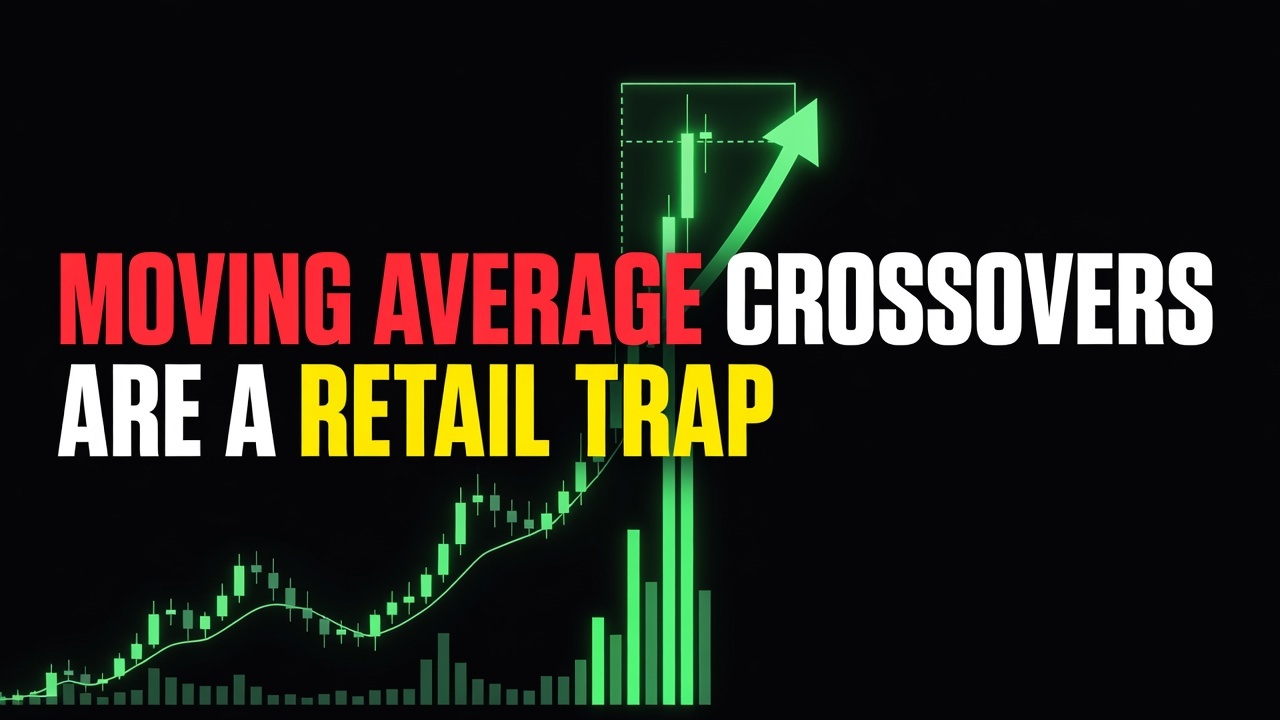
Moving Average Crossovers Are a Retail Trap

📊 September 18, 2026
- Moving average crossovers trigger entries at the worst possible time by design because lagging math chases exhausted momentum.
- Relying on two smoothing lines to dictate execution guarantees deep slippage during trends and constant capital destruction in sideways chop.
- Treat moving averages as dynamic value zones and trend filters, while using structural price breaks to trigger actual entries.
— Ben, Find Better Trades
Every beginner gets fed the exact same textbook setup when they open their first brokerage account. Slap a fast moving average and a slow moving average onto a chart, wait for the lines to cross, and buy the breakout. It looks effortless, systematic, and completely idiot-proof on a cherry-picked screenshot.
The truth is brutal. Trading moving average crossovers as an execution trigger is one of the quickest ways to bleed your trading capital dry through death by a thousand cuts.
Why Everyone Gets This Wrong
The problem comes down to basic mathematics that retail traders ignore. A moving average does not forecast where price will go; it merely calculates the average of past closing prices over a specific lookback window. When you wait for two separate lagging indicators to cross over one another, you are stacking lag on top of lag.
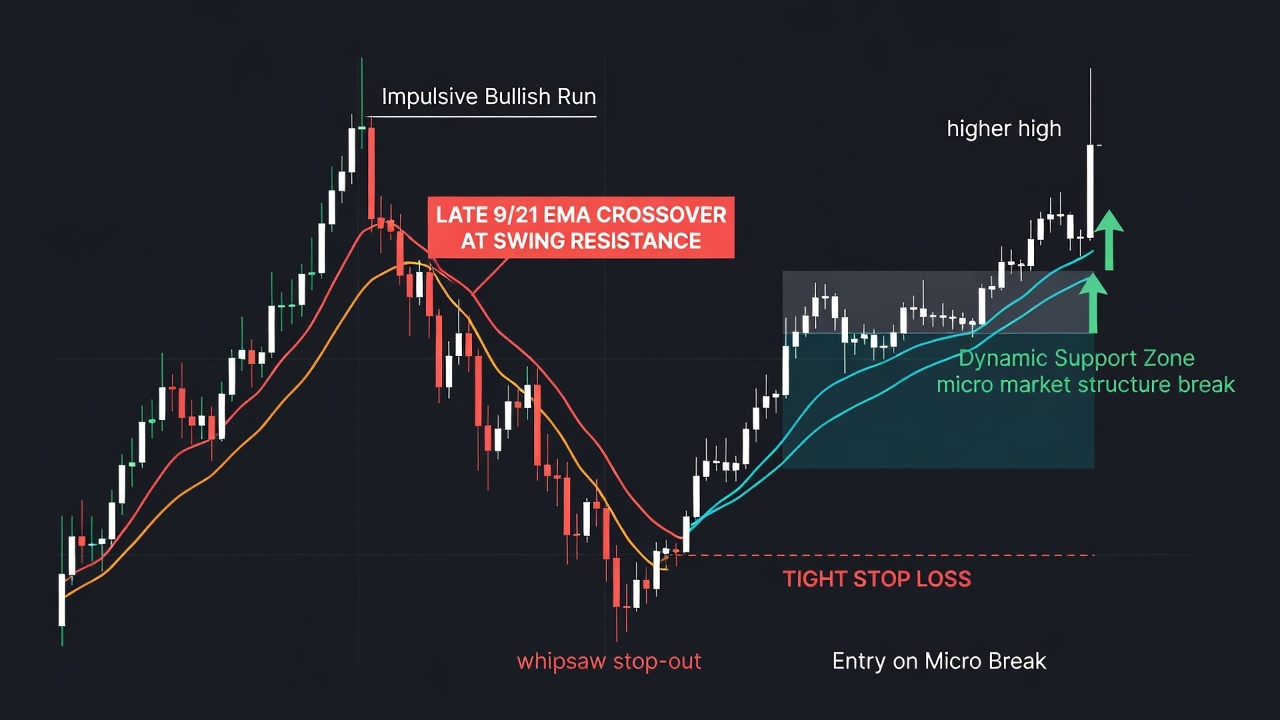
Consider a stock that breaks out from a tight accumulation base and drives upward in a clean impulse move. By the time that 9-period exponential average finally curls upward and crosses above the 21-period line, the asset has already moved three or four average true ranges away from fair value. Buyers are exhausted, profit-taking begins, and institutions look for liquidity to distribute their positions.
You end up hitting the buy button at the exact swing high of the move. You take on maximum risk for minimal remaining reward, buying precisely when the statistical probability of a mean-reverting pullback reaches its highest point. Your stop gets hunted on the ensuing correction before the broader trend even resumes.
The damage multiplies tenfold the second price enters a consolidation phase. When a market trades sideways inside a defined range, moving averages inevitably flatten out and tangle together. You will trigger five consecutive crossover signals inside a tight twenty-cent spread, eating slippage and commissions on every false break.
Traders cling to crossover setups because it removes discretionary thinking and eliminates the discomfort of making decisions. But a crossover is never an institutional buying catalyst. It is merely mathematical confirmation that the recent past was slightly higher than the distant past.
What Actually Works
If you want to trade with real edge, stop using moving averages as entry triggers and start using them as dynamic value zones. The real money in trend trading is made by buying pullbacks into value, not chasing price when it stretches away from it.
When an asset is trending, the moving average represents the equilibrium price where institutional accumulation typically restarts. Instead of buying when the 20 EMA crosses the 50 EMA, wait for price to extend outward, exhaust itself, and pull back gently into that rising 20 EMA band. You want to see compression and declining volume as price tests the dynamic level.
Once price reaches that value pocket, let raw market structure handle your trigger. Drop down a timeframe and look for a micro break of structure, such as a shift from lower highs to a higher high with an expanding volume candle. You place your entry on the reclaim of that level, tucking your stop loss safely below the swing low.
This simple adjustment flips your risk-to-reward ratio instantly. You stop buying late momentum at structural resistance and start entering with asymmetric risk right alongside institutional reloads.
You can verify this visually on any liquid instrument. Strong trends hold their dynamic moving average zones on quiet pullbacks; they rarely give clean crossover signals until the move is already halfway done.
When Moving Averages Can Still Help
Moving averages are far from useless, provided you strip away the crossover hype and use them strictly as directional filters. If price is printing consistently above a rising 50-period EMA, you have an objective bias to seek long setups and ignore short patterns entirely.
They also provide immediate visual feedback on market regime. When moving averages fan out with clean spacing between them, the market is trending and pullbacks are tradable. When the lines flatten out and interweave horizontally, the market is deadlocked in equilibrium and trend systems must be turned off.
🎯 Want Setups Like These? The Big Dipper Does the Scanning For You.
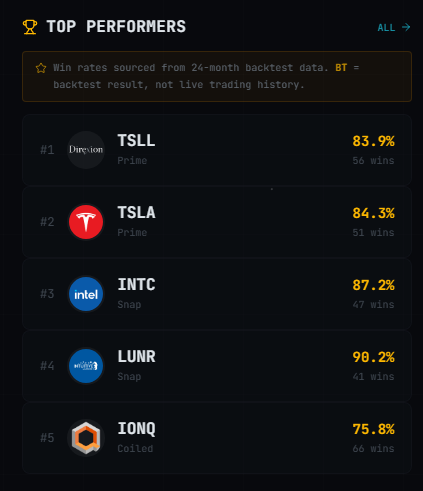
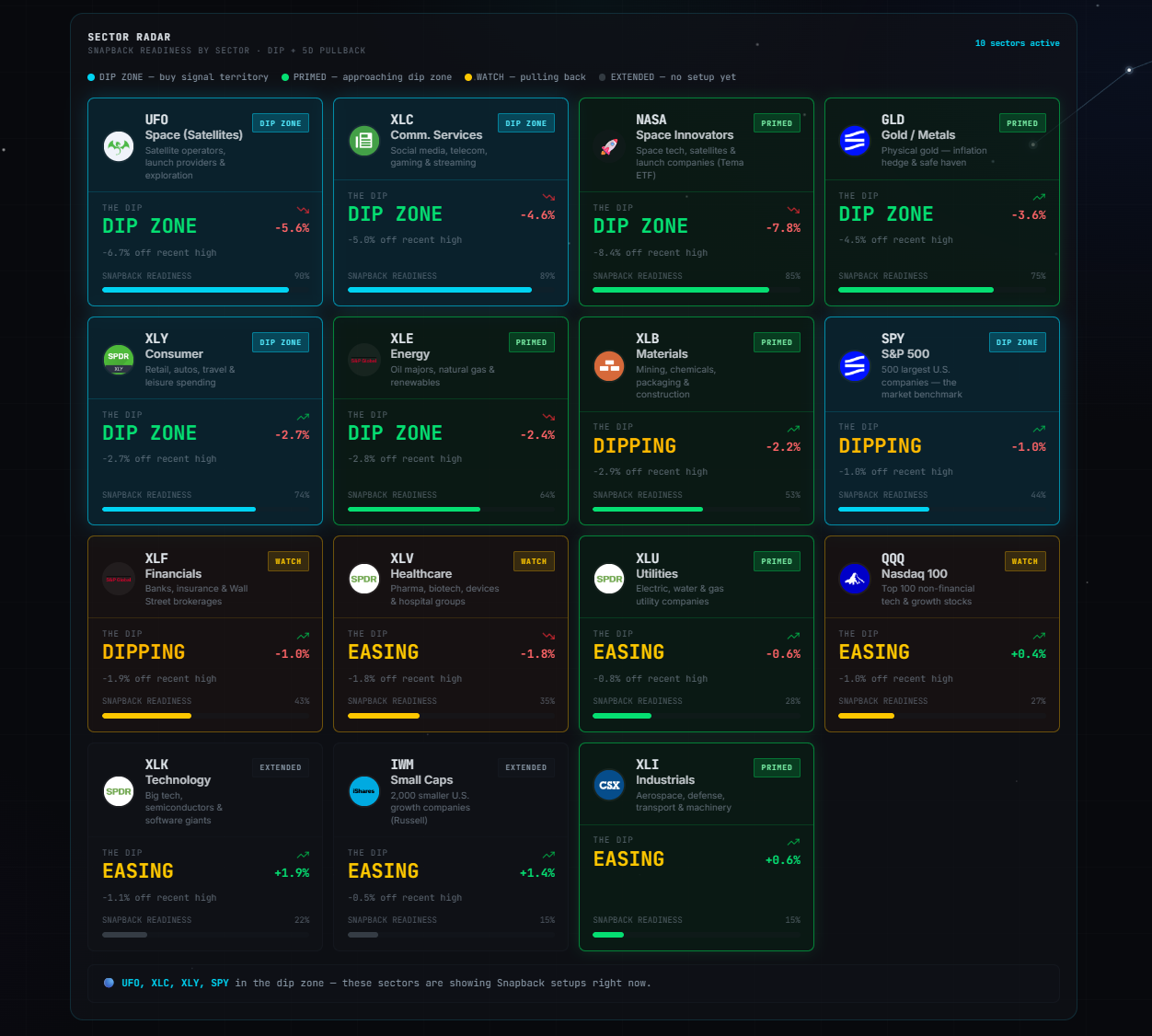
Every morning the Big Dipper delivers curated DIP ZONE trade ideas — stocks already at high-probability entry levels, with targets pre-set. No guessing, no scanning. Just setups.
Moving Average Crossover FAQ
Q: Why do moving average crossovers fail so frequently during daily trading?
A: Moving average crossovers fail because they rely on backward-looking calculations that lag real-time market shifts, forcing you into trades after momentum has peaked and creating continuous whipsaws during ranging markets.
Q: What is the best moving average setting to replace the traditional crossover?
A: The 20-period and 50-period exponential moving averages are superior when treated as dynamic support and resistance zones rather than automated crossover triggers.
Free For Traders
This Free Indicator Finds Overbought & Oversold Levels For You
Add the Red & Green Zone indicator to TradingView at zero cost. It does the level-hunting automatically on any chart.

From Find Better Trades
Only Trade When Momentum Is HEAVILY In Your Favor
The Power Index oscillator measures trend conviction at a glance — it filters out weak, choppy action so you only take the strong moves.

📈 Want More? Join Our Free Trading Community
- Trading Strategy Guides Telegram — daily strategy tips and market insights
- Find Better Trades Telegram — free trade signals delivered to your phone
- Find Better Trades on YouTube — live trade breakdowns and tutorials