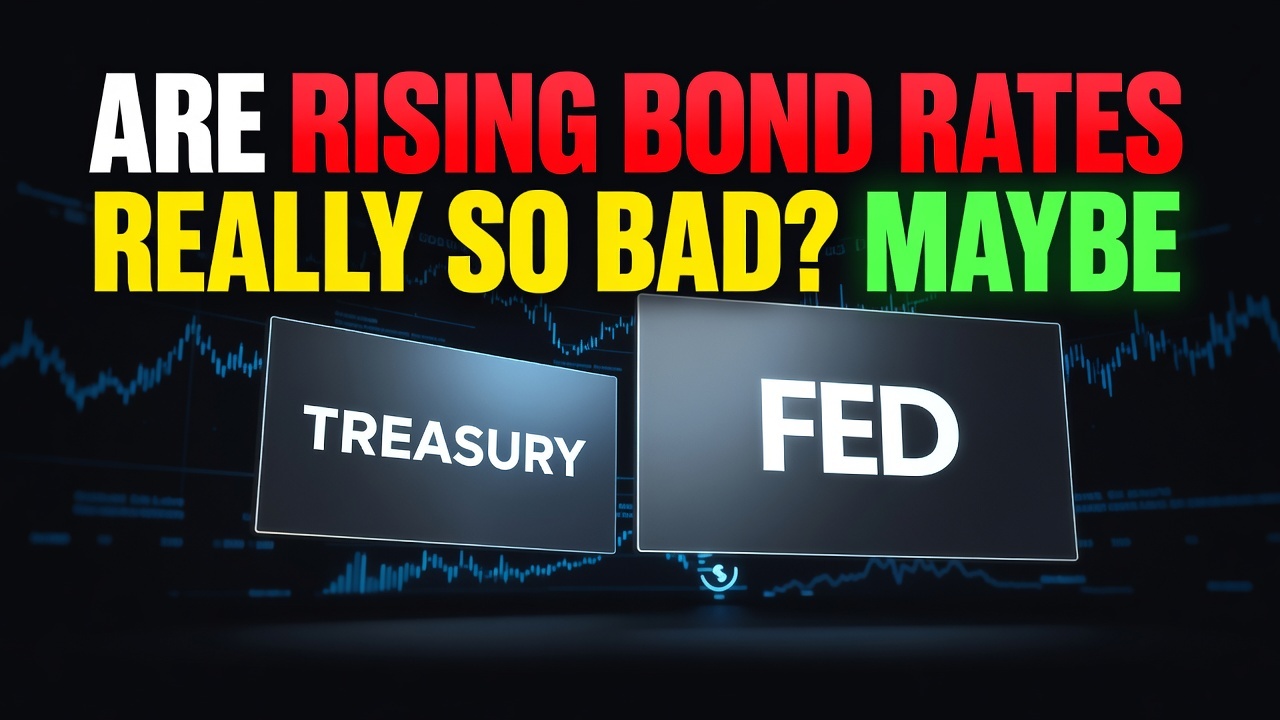
Are Rising Bond Rates Really So Bad? Maybe Not, Say These Experts. September 1, 2026

⚡ What This Means for Traders — September 1, 2026
- The market’s knee-jerk fear about rising bond rates is a misread.
- Expect short-term volatility but pivot to growth sectors that thrive on real economic demand.
- I’m cautiously bullish, looking for opportunities in companies that benefit from a stronger economy.
— Ben, Find Better Trades
Alright, today’s GDP numbers just hit, and the market’s doing its usual thing, panicking about bond rates. But hold on a second. The headline about “experts” saying higher rates aren’t so bad? That’s a huge shift in narrative, and we need to pay attention.
This isn’t a disaster in the making. We’ve been conditioned to fear rising rates, but the context here is critical. This is about underlying economic strength, not weakness.
What Just Happened
The latest GDP report dropped today, September 1, 2026. It’s causing a significant buzz, especially concerning its implications for bond rates and recession fears. Everyone’s trying to figure out if this signals a downturn.
But the detail is telling: those near-zero interest rates that defined the post-GFC decade? They were a symptom of economic dysfunction. They reflected a lack of demand for capital.
Now, higher rates are emerging. This isn’t necessarily bad; it reflects a stronger demand for capital. That’s a clear sign of robust economic growth, not a looming recession.
The market’s initial reaction often misses the bigger picture. We need to understand the ‘why’ behind the numbers, not just the numbers themselves. This is about a healthier economic environment.
What It Means for Your Trades
So, what’s the play here for active traders? You need to adjust your strategy. Don’t get stuck in the old paradigm where low rates were the only game in town.
Growth sectors are where the money will flow. Think technology, industrials, and discretionary consumer companies. These firms thrive when there’s real economic expansion and confidence.
Companies that need to borrow to fund their expansion will see increased demand for their products and services. That makes their growth prospects more attractive, even with slightly higher borrowing costs.
On the other hand, traditional defensive plays might struggle. Utilities and REITs, often bought for their yield, become less appealing when bond yields offer a competitive return. Their relative attractiveness diminishes.
I’m looking for a clear rotation out of these yield-driven assets and into areas that capitalize on actual business expansion. This isn’t about inflation panic; it’s about a stronger economy demanding more capital.
My Take
My stance is cautiously bullish. Higher interest rates, when driven by genuine economic strength, are a positive. They reflect a healthy, functioning market where capital is valued.
The decade of near-zero rates was abnormal. It bred a certain kind of market behavior. We’re moving past that now, into an environment where economic fundamentals actually matter more.
Don’t let the “recession” headlines scare you away from opportunity. This shift indicates robust demand and a more normalized economy. It’s time to re-evaluate your long-term positions.
I’m positioning for sectors that benefit from a stronger economy. This isn’t a time for fear; it’s a time for smart allocation. Stay agile and watch the capital flows.
Conviction: moderate — headline risk remains
Macro Pulse FAQ
Q: What does GDP mean for my portfolio?
A: A stronger GDP report signals robust economic health and directly supports corporate earnings. This translates to better fundamentals for many stocks over the long term.
Q: Should I buy stocks with higher rates?
A: Yes, but be selective. Focus on growth-oriented sectors that thrive on increased capital demand and economic expansion. Higher rates, in this context, signal market confidence.
Q: Are we in a recession?
A: Today’s GDP data, interpreted with the idea that higher rates reflect demand, points away from an immediate recession. The underlying economic activity shows strength, not contraction.
Q: How do rising bond rates affect options trading?
A: Volatility might increase as the market adjusts to the new rate environment. Focus on strategies that benefit from sector rotation and potential swings in growth-oriented stocks.
Free For Traders
One Clear Arrow. Every High-Probability Setup. Free.
The Fusion Indicator combines multiple signals into a single buy/sell arrow on TradingView so you never miss a move.

From Find Better Trades
Only Trade When Momentum Is HEAVILY In Your Favor
The Power Index oscillator measures trend conviction at a glance — it filters out weak, choppy action so you only take the strong moves.

📈 Want More? Join Our Free Trading Community
- Trading Strategy Guides Telegram — daily strategy tips and market insights
- Find Better Trades Telegram — free trade signals delivered to your phone
- Find Better Trades on YouTube — live trade breakdowns and tutorials