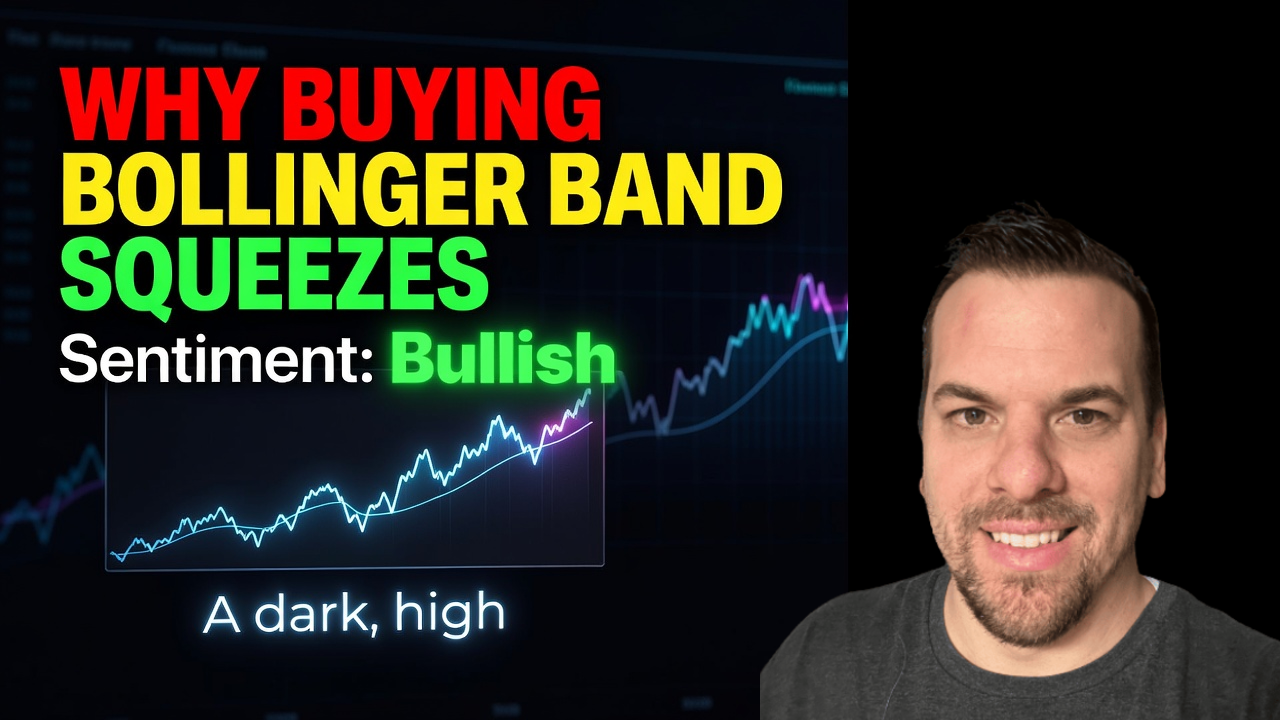
Why Buying Bollinger Band Squeezes at Support Is Blowing Up Your Account

📊 August 10, 2026
- Trading a Bollinger Band squeeze blindly at support is a fast track to getting destroyed by institutional distribution.
- Retail traders wrongly treat low volatility compression as a bullish signal, front-running moves before directional momentum exists.
- Wait for a liquidity sweep below support followed by a heavy volume reclaim, or require a decisive upper-band breakout before entering.
— Ben, Find Better Trades
If you are opening long positions the second Bollinger Bands pinch tightly near a support level, you are handing free capital to market makers. Every standard trading book tells you that a squeeze near key support guarantees an explosive move higher, but they conveniently ignore which direction that explosion usually takes. I have watched countless retail traders buy into these quiet consolidations only to get wiped out by an aggressive institutional breakdown.
Why Everyone Gets This Wrong
The standard retail playbook sounds deceptively simple. Price pulls back to a major horizontal support level, the upper and lower Bollinger Bands compress into a narrow neck, and internet trading gurus tell you to load up before volatility expands. They treat low volatility as an automatic bullish sign simply because it occurs near a line drawn on a chart.
Here is the reality: a squeeze is completely direction-agnostic. Compression merely tells you that market volatility has reached a cyclical low, not that smart money is quietly accumulating shares. When price compresses tightly against a support level, it frequently means sellers are relentlessly capping every bounce, draining bid liquidity until the floor gives way.
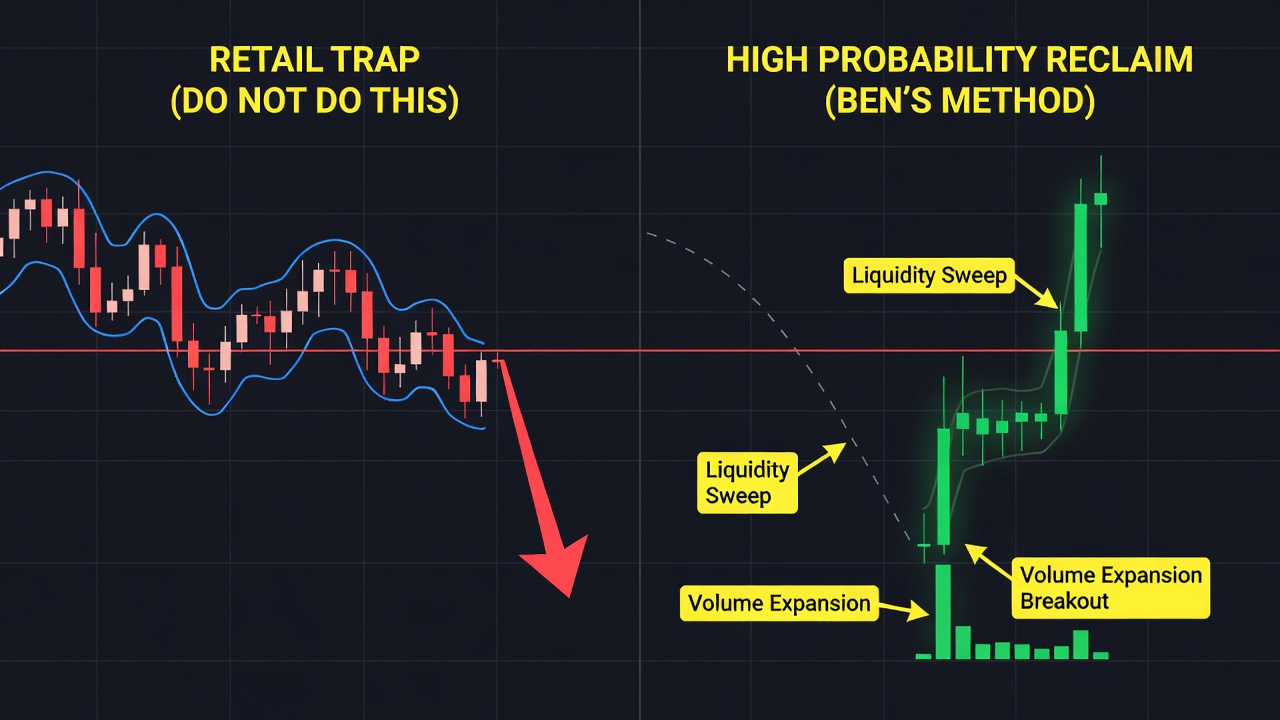
Consider a stock drifting down to $50 support while its 20-period Bollinger Bands contract to their narrowest width in months. Amateurs rush to buy at $50.10, placing tight stop-losses at $49.70 because the compressed bands create a false sense of safety. Instead of launching higher, large players use that tight consolidation to dump heavy inventory, triggering every stop in a single candle and crushing price down to $44.
By front-running a squeeze at support, you are taking positions inside a low-conviction zone. You are trading blind hope rather than actual order flow, exposing your capital to maximum risk when the market lacks directional intent.
What Actually Works
Stop trying to predict which way the spring will coil and let institutional volume reveal the true move first. To trade squeezes near support with actual statistical edge, you must demand a specific sequence of structural events before placing a trade.
My go-to structure is the Liquidity Sweep Reclaim. Instead of buying inside the tight bands, you allow price to break down through support and push past the lower Bollinger Band. You want to see that breakdown immediately fail as responsive buyers step in, driving price right back above support and closing inside the bands on heavy volume. That structural failure proves big money swept sell-side liquidity to fill long orders, making the subsequent squeeze expansion high-probability.
If the market does not offer a liquidity sweep, force the squeeze to prove itself on the upside before taking exposure. Look for a full-bodied green expansion candle that closes decisively outside the upper Bollinger Band while volume spikes at least 150% above its 20-period average. Only take the trade when the 20-period moving average (the middle band) turns sharply upward to back the move.
Set your stop-loss beneath the middle band or the low of the liquidity sweep, rather than hugging the tight outer band. This gives your trade space to handle normal volatility while ensuring you stay positioned only as long as institutional momentum holds.
When Bollinger Band Squeezes Can Still Help
Bollinger Band squeezes are not useless; they are fantastic timing alerts when treated as preparation tools rather than execution signals. A tight squeeze alerts you that major volatility is building, giving you time to mark key levels and set price alerts so you never get caught sleeping.
When you stop using compression as an entry trigger and start using structural price action to confirm direction, you transform a dangerous retail trap into a high-probability trading framework.
🎯 Want Setups Like These? The Big Dipper Does the Scanning For You.
Every morning the Big Dipper delivers curated DIP ZONE trade ideas — stocks already at high-probability entry levels, with targets pre-set. No guessing, no scanning. Just setups.
Bollinger Band Squeeze FAQ
Q: Should I buy a Bollinger Band squeeze before the bands expand?
A: No, because a squeeze offers zero directional bias until price breaks out with real volume. Buying early inside the compression is pure speculation against potential breakdown risk.
Q: What timeframe works best for trading squeezes at support?
A: The 1-hour and 4-hour charts offer the ideal balance between signal clarity and actionable volatility expansion. Lower timeframes like the 5-minute chart generate far too many false squeezes and liquidity whipsaws.
Free For Traders
One Clear Arrow. Every High-Probability Setup. Free.
The Fusion Indicator combines multiple signals into a single buy/sell arrow on TradingView so you never miss a move.

From Find Better Trades
Only Trade When Momentum Is HEAVILY In Your Favor
The Power Index oscillator measures trend conviction at a glance — it filters out weak, choppy action so you only take the strong moves.

📈 Want More? Join Our Free Trading Community
- Trading Strategy Guides Telegram — daily strategy tips and market insights
- Find Better Trades Telegram — free trade signals delivered to your phone
- Find Better Trades on YouTube — live trade breakdowns and tutorials