The Real Reason Breakouts Fail — and How Price Action Warns You First

📊 July 15, 2026
- Breakouts do not fail because of market makers; they fail because you are buying exhausted momentum at obvious liquidity pools.
- The biggest flaw is entering blindly on a high-volume candle break without analyzing the micro-structure of the preceding trend.
- Look for tight, high-volume consolidation immediately below resistance, rather than extended vertical runs that run out of gas.
— Ben, Find Better Trades
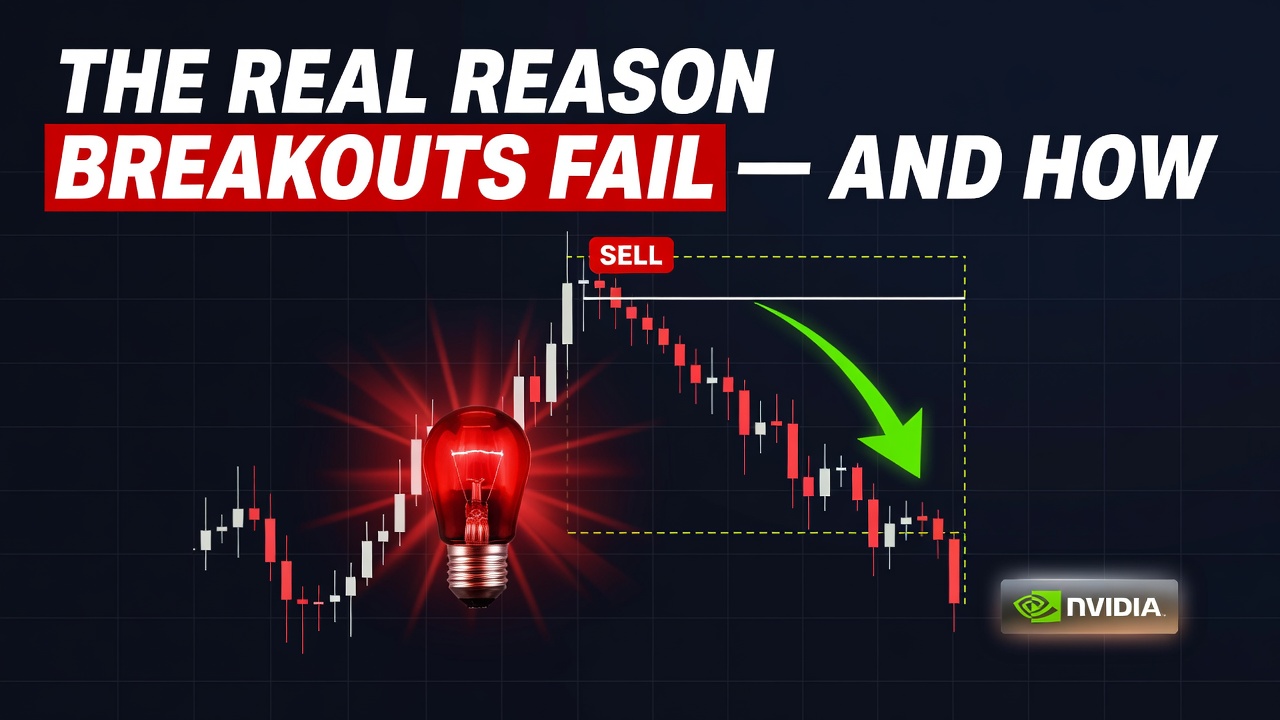
Stop blaming market makers and stop hunting for conspiracy theories when your breakout trades get instantly reversed. The truth is much simpler: you are buying the absolute end of a move because you do not know how to read the exhaustion signatures on your chart. Price action tells you exactly when a breakout is a trap, long before the candle closes.
Why Everyone Gets This Wrong
Retail traders love buying the breakout of a clean, horizontal resistance line. They see a massive, fast-moving green candle slice through a level that has held for weeks, and they market-order in out of pure FOMO. They assume that high volume on the breakout candle automatically validates the move, believing the big players are pushing price higher.
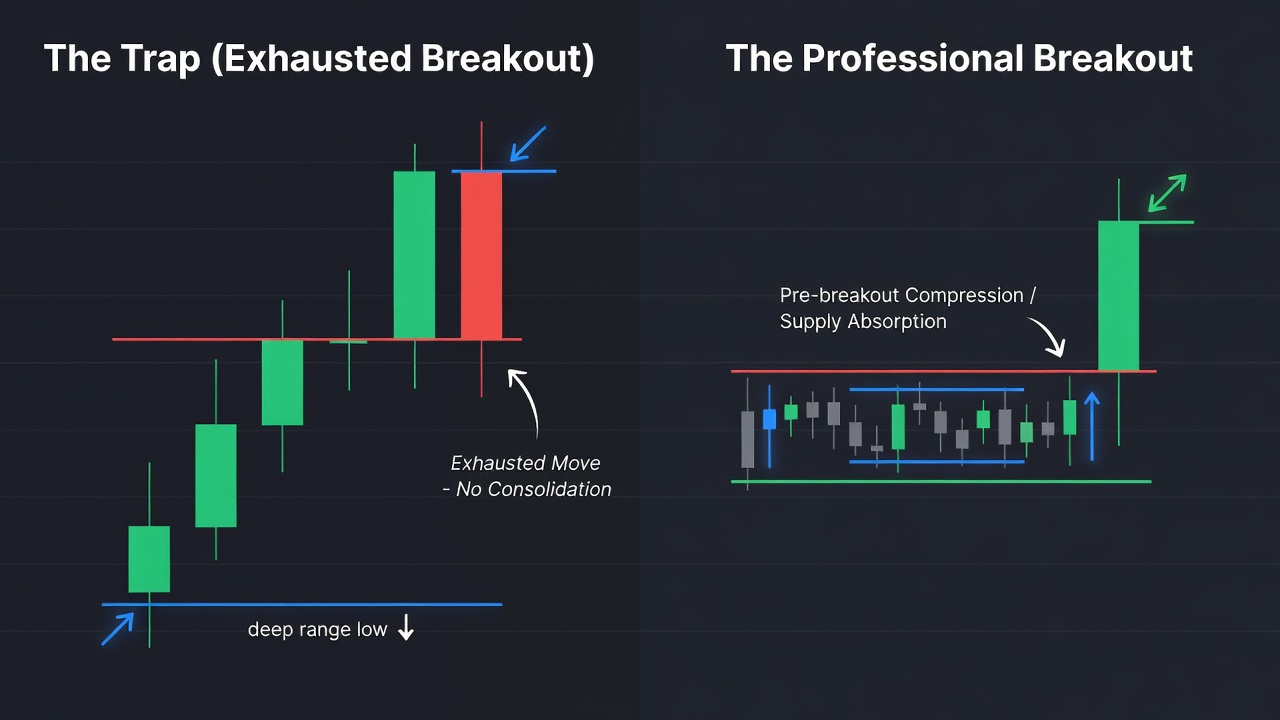
What they fail to see is the starting point of that breakout candle. If the price initiated its run from the bottom of a wide trading range and moved straight up without pausing, it is already exhausted by the time it reaches resistance. The high volume you see at the breakout point is not institutions buying; it is smart money taking profits and matching their sell orders with your desperate buy orders.
Think of it like a sprinter. If a runner has to sprint 100 meters just to reach the starting line of a hurdle race, they will have zero energy left to actually jump the hurdle. A vertical, multi-candle run directly into a key resistance level is the exact same dynamic, leaving the buyers completely depleted at the exact moment they need fresh capital to sustain the push.
What Actually Works
To trade breakouts successfully, you must demand to see a transition of power before the level breaks. This happens through accumulation candles and tight consolidation right under the key level, which I call the pre-breakout build. When price compresses tightly against resistance and refuses to pull back, it tells you sellers are no longer able to push the price down.
You want to see small, overlapping candles with shallow pullbacks, forming a clean ascending triangle or a tight flag directly beneath the level. This structure shows that buyers are absorbing all the selling pressure right at the source. When the breakout finally occurs from this compressed base, the move requires very little effort because the overhead supply has already been completely cleared out.
Your entry should not be a chase on a massive, runaway candle. Instead, you enter either within the tight pre-breakout consolidation with a microscopic stop-loss, or you wait for the very first micro-retest of the broken level on a lower timeframe. If the breakout candle is twice the size of the average true range of the last ten candles, you skip the trade entirely.
When Volume and Order Flow Can Still Help
While price structure is your primary filter, volume analysis is still incredibly useful when applied to the consolidation phase rather than the breakout candle itself. You want to see volume steadily declining during the tight compression right under resistance. This quiet before the storm indicates that selling pressure is drying up and a massive imbalance is about to occur.
When the breakout finally happens, a modest increase in volume is plenty to sustain it because there is no remaining supply to fight against. Do not wait for a massive, climactic volume spike to tell you the break is real; by then, the move is over and you are buying the top.
🎯 Want Setups Like These? The Big Dipper Does the Scanning For You.
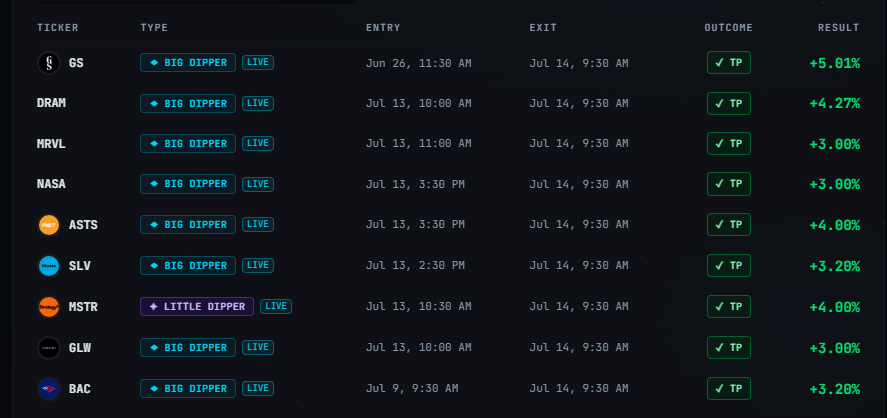
Every morning the Big Dipper delivers curated DIP ZONE trade ideas — stocks already at high-probability entry levels, with targets pre-set. No guessing, no scanning. Just setups.

Frequently Asked Questions About Breakout Failures
Q: How do I distinguish between a healthy pullback after a breakout and a total failure?
A: A healthy pullback occurs on very low volume with small, controlled candles that hold the broken resistance level as new support. A breakout failure features a rapid, high-volume engulfing candle that immediately closes back inside the previous trading range.
Q: Is it safer to buy the breakout or wait for the retest?
A: Waiting for a clean retest is statistically safer because it provides structural confirmation, but you must accept that you will miss the strongest, most explosive moves that never look back. The best compromise is entering a partial position during tight pre-breakout compression and adding on a successful retest.
🎯 Get High-Probability Trade Setups — Free
The Big Dipper Dashboard delivers curated trade ideas straight to your screen every morning. Know what to watch before the opening bell.

📈 Want More? Join Our Free Trading Community
- Trading Strategy Guides Telegram — daily strategy tips and market insights
- Find Better Trades Telegram — free trade signals delivered to your phone
- Find Better Trades on YouTube — live trade breakdowns and tutorials