Why ATR Is the Most Underrated Indicator on Your Chart

📊 September 14, 2026
- Average True Range is the single most valuable tool on your chart because it measures market reality instead of guessing directional bias.
- Traders suffocate their setups with arbitrary, fixed-dollar stops that ignore how widely the asset is currently swinging.
- Tie your position sizing and stop distance directly to a 1.5x or 2x ATR multiple to survive market noise and let winners run.
— Ben, Find Better Trades
Most retail traders clutter their monitors with three flavors of RSI and an over-tweaked MACD, hoping an oscillator will predict tomorrow’s move. Meanwhile, they set arbitrary fifty-cent stops and blow up their accounts on routine chop before the real trend even starts.
Average True Range (ATR) does not predict direction, and that is precisely why most traders ignore it. It strips out your wishful thinking and forces you to confront the one thing you can actually measure: volatility.
Why Everyone Gets This Wrong
Retail traders treat stop losses as emotional comfort blankets rather than mathematical boundaries. You spot a clean breakout, take the entry, and place your stop two ticks beneath the entry candle simply because you only want to risk twenty dollars on the trade.
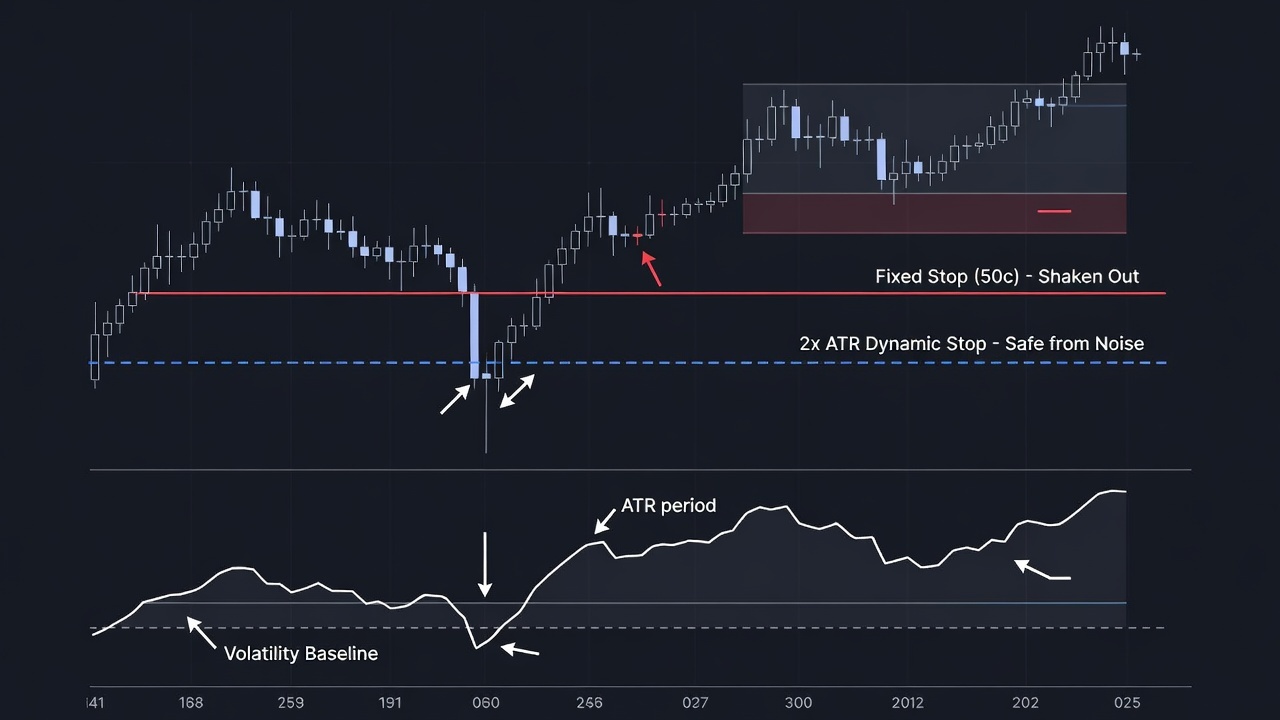
If that stock carries a daily ATR of four dollars, placing a tight forty-cent stop underneath an intraday pivot is financial suicide. The market did not reverse against your thesis; you simply suffocated the position inside ordinary, random market variance.
Traders hate ATR because the line does not tell them when to buy or sell. They want a flashing arrow that promises directional certainty, so they discard the one metric that prevents them from getting shaken out by routine institutional liquidity sweeps.
Even worse, most traders keep their share sizes completely static regardless of market conditions. Holding the same one-thousand-share lot when ATR doubles as you did during a dead summer consolidation will blow your risk parameters apart.
What Actually Works
Throw out fixed-tick stops and start sizing your trade distance entirely around ATR multiples. If you enter a swing setup on an asset with an ATR of $2.20, a sensible stop belongs roughly 1.5x to 2x that value away from your entry price.
This single adjustment pushes your stop beyond the reach of normal market noise while keeping you in the trade if the primary trend remains intact. You stop taking infuriating losses on trades where your directional idea was dead right all along.
Next, let ATR dictate your share size rather than your ego. When volatility expands and your stop must widen to 2x ATR, you mathematically reduce your share count so your total dollar risk stays identical.
You can also track ATR compression to catch explosive moves before they happen. When 14-period ATR grinds down to multi-month lows, volatility has dried up, which almost always precedes a violent directional expansion you can trade with clean risk.
When ATR Can Still Help
ATR will never rescue a trading system that has zero directional edge. It has no directional bias whatsoever, meaning an ATR spike tells you price is moving aggressively, but it will never tell you whether buyers or sellers are winning the tape.
Where it excels is serving as the unemotional risk manager in your corner, stopping you from overleveraging sleepy chop or getting run over during wild regime shifts.
🎯 Want Setups Like These? The Big Dipper Does the Scanning For You.
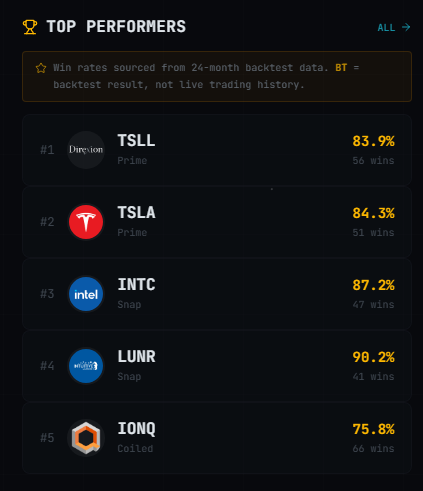
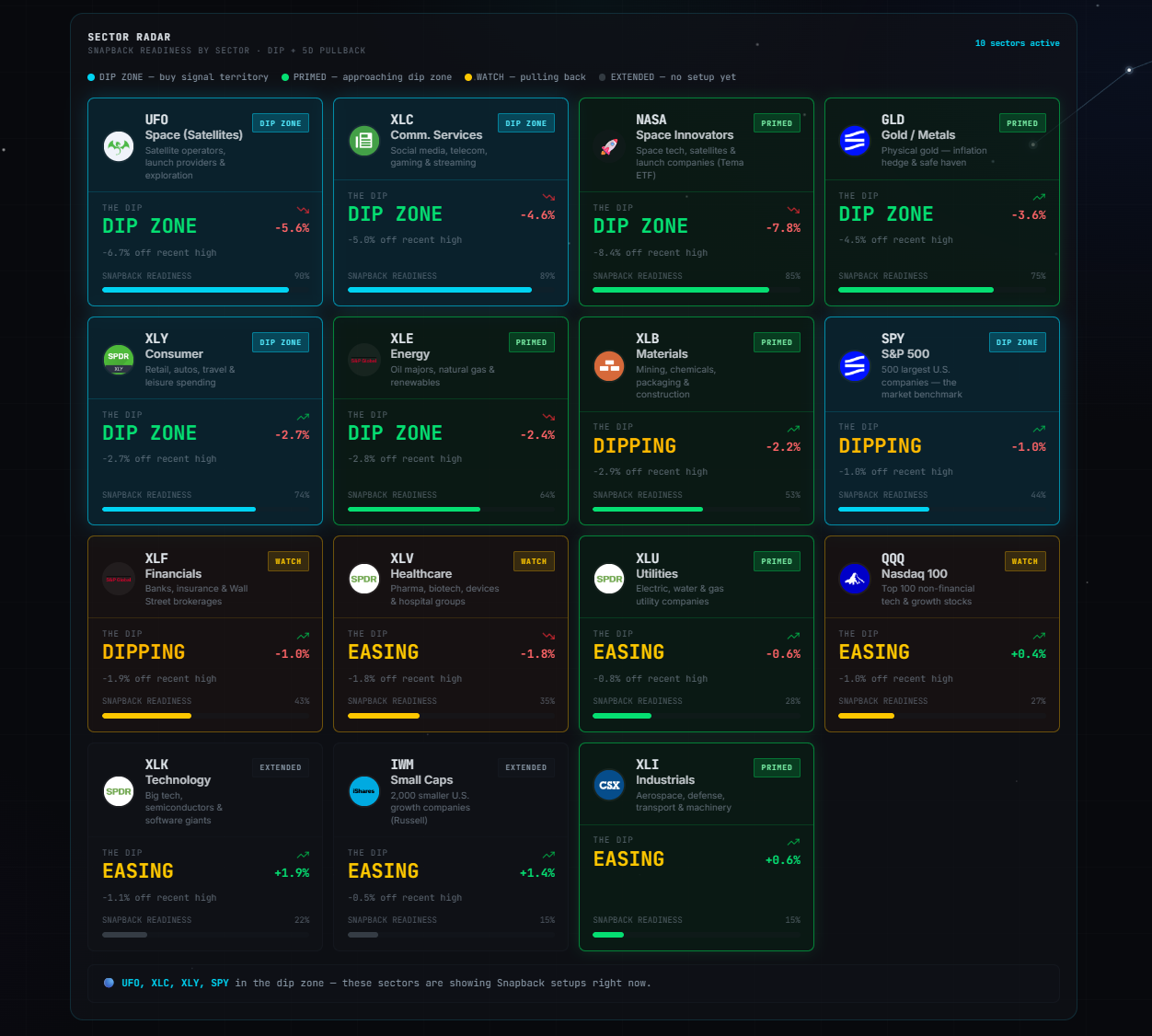
Every morning the Big Dipper delivers curated DIP ZONE trade ideas — stocks already at high-probability entry levels, with targets pre-set. No guessing, no scanning. Just setups.
ATR FAQ
Q: What is the best ATR setting for day trading?
A: Use the default 14-period setting on your execution timeframe. Faster lookbacks create jittery, reactive values, while longer settings lag behind intraday volatility spikes.
Q: How do I use ATR to set a trailing stop?
A: Multiply the current ATR by 2.0 and trail your stop behind the highest high in an uptrend, adjusting it upward as new swing highs form.
Free For Traders
Know What To Trade BEFORE The Opening Bell
The Big Dipper Dashboard hands you curated high-probability setups every single morning — free.

From Find Better Trades
Stop Scanning Charts. Let The Alerts Come To You.
Real-time Telegram alerts when stocks approach critical S&R levels across the whole market.

📈 Want More? Join Our Free Trading Community
- Trading Strategy Guides Telegram — daily strategy tips and market insights
- Find Better Trades Telegram — free trade signals delivered to your phone
- Find Better Trades on YouTube — live trade breakdowns and tutorials