Why Moving Average Bounces Are Traps (And How to Trade Them Right)

📊 September 6, 2026
- Blindly buying a moving average touch is volunteering your capital as exit liquidity for institutions.
- The fatal mistake is treating a lagging mathematical average like a hard structural floor where buyers must step in.
- Wait for a liquidity sweep and a micro-structure reclaim around the average before risking a single dime.
— Ben, Find Better Trades
Retail trading courses love selling the fantasy that the 21 EMA or the 50 SMA functions as an invisible trampoline for institutional money. Heading into Monday’s open, continuing to trust that fairy tale is the fastest way to bleed your account dry. A moving average holds zero predictive power, possesses no physical support properties, and has never once stopped a falling stock on its own.
Why Everyone Gets This Wrong
Most retail traders view a rising stock, watch it pull back toward a moving average, and immediately fire off a blind limit buy right on the line. They assume thousands of algorithms share their romanticized belief that a historical average calculation represents genuine buying interest.
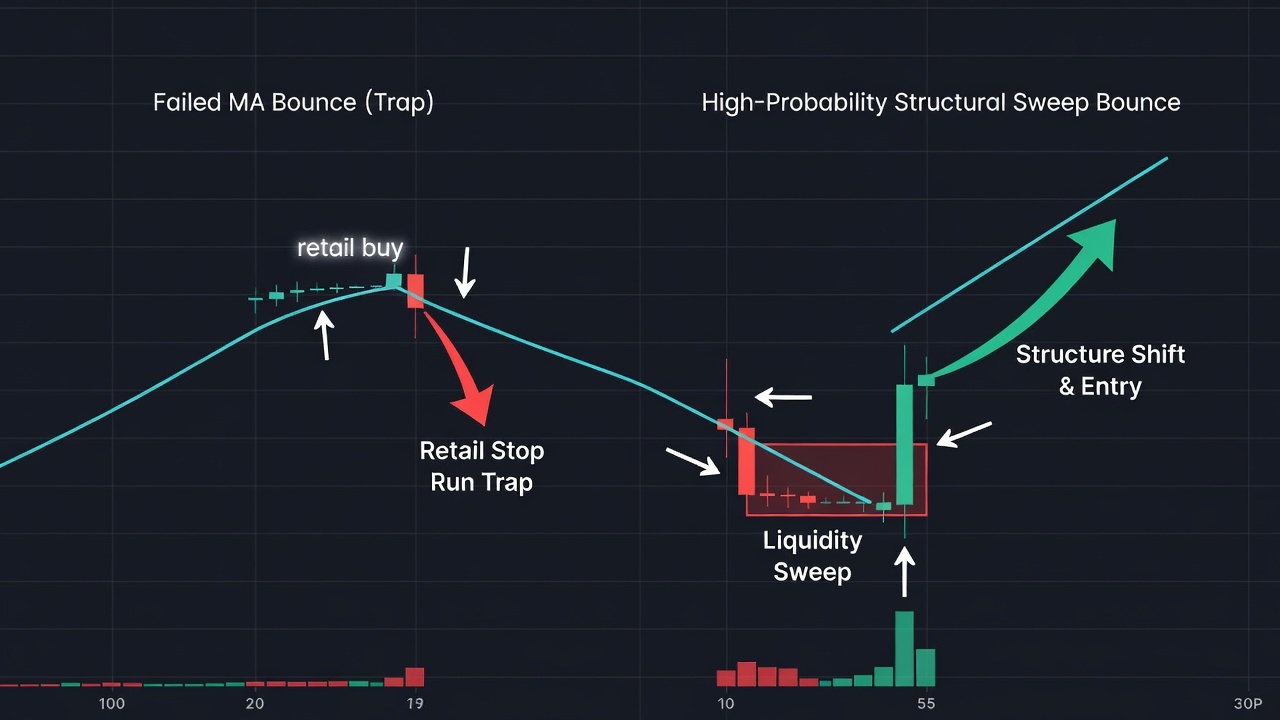
What actually happens at these technical touchpoints is predatory order matching. In a tired trend, institutional desks actively use that anticipated retail bounce to dump remaining distribution inventory straight into the resting bids clustered at the indicator.
Picture a high-flying momentum stock drifting lower on drying volume after printing clear exhaustion wicks at new swing highs. As price touches the daily 20 EMA, retail orders flood the tape expecting an automatic rocket back to the highs.
Instead of launching higher, the price produces an anemic two-bar stall that traps eager breakout traders who bought the line. Once those bids are filled, the market slices right through the average, triggering stop-losses in a swift liquidation cascade that leaves retail traders stunned.
What Actually Works
If you want to survive when markets open tomorrow, eliminate blind limit orders at indicator lines from your playbook entirely. The moving average is nothing more than an alert zone telling you to look at price structure, not an execution trigger in itself.
What separates a real bounce from a death trap is the behavior of liquidity around the level. You want to see price intentionally pierce the moving average, flush out the obvious stops resting right below it, and violently reclaim the line on heavy volume.
Once that liquidity sweep prints, drop down to your execution timeframe to confirm a market structure shift. You want to see a decisive break above the most recent lower high on that smaller timeframe, giving you a real invalidation point rather than an arbitrary guess under an indicator.
Trend maturity also dictates your survival rate. A first or second pullback to a rising moving average in a fresh trend often resolves upward because institutional accumulation is still active; by the fifth or sixth test, the bounce is almost guaranteed to be a bull trap.
When Moving Averages Can Still Help
Moving averages are far from useless when you strip away the superstition and treat them as objective regime filters. When an asset trades persistently above an upward-sloping 20-period moving average without touching it for sessions, it objectively confirms an aggressive momentum phase where fighting the tape is reckless.
Use them as a high-altitude visual guide to ensure you are aligning with prevailing market inertia, never as a stand-alone trading signal. Let the moving average establish the bias, but force raw price action and volume to grant entry permission.
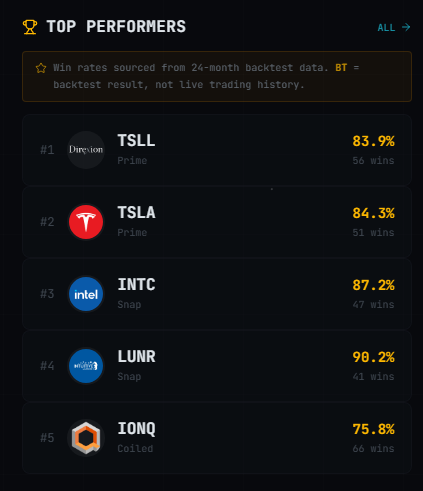
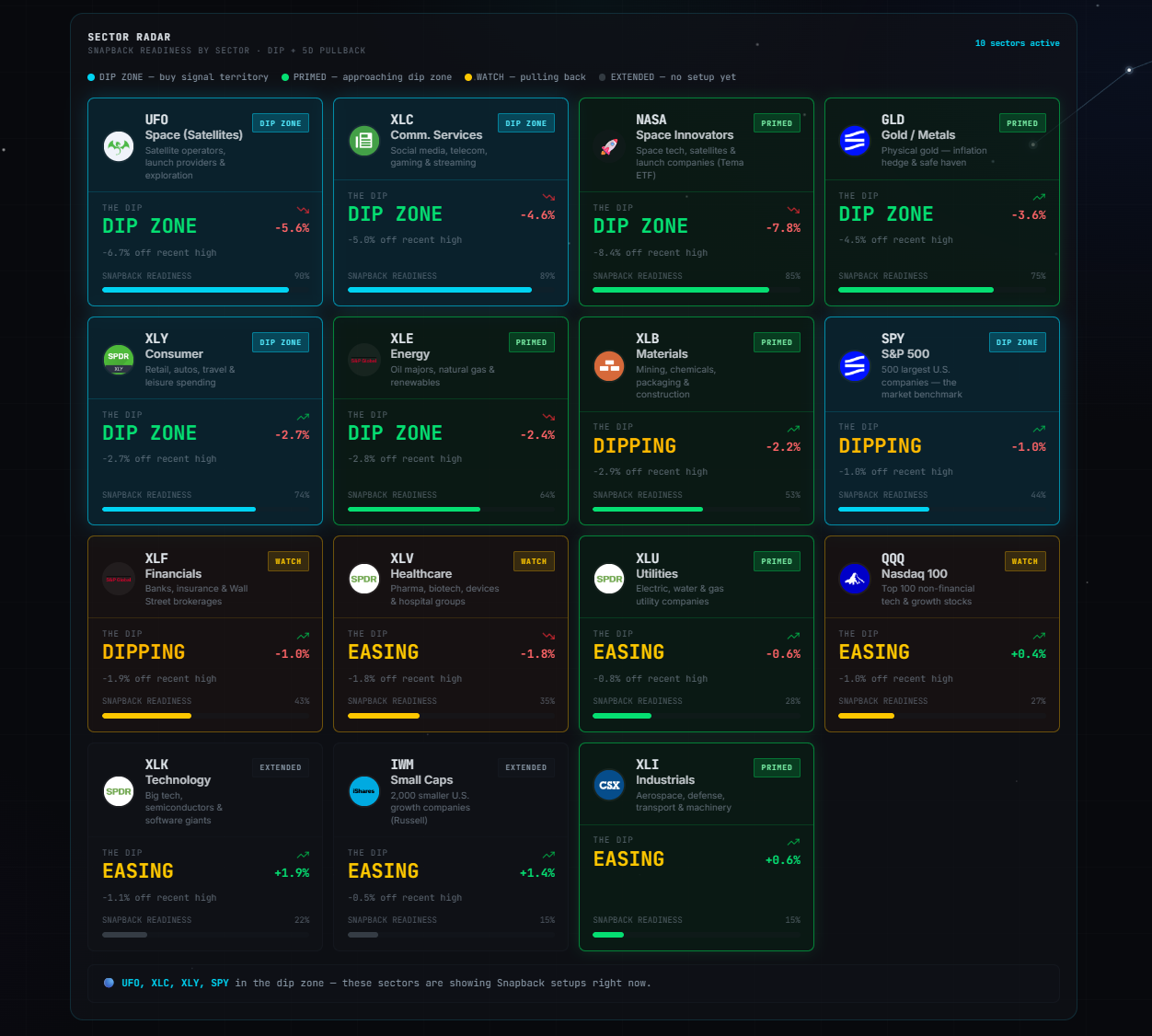
🎯 Want Setups Like These? The Big Dipper Does the Scanning For You.
Every morning the Big Dipper delivers curated DIP ZONE trade ideas — stocks already at high-probability entry levels, with targets pre-set. No guessing, no scanning. Just setups.
Moving Average Bounce FAQ
Q: What is the best moving average for trading bounces on stocks?
A: No single period possesses magical support properties, though the 20 EMA and 50 SMA attract the highest concentration of retail order flow. Use these common settings exclusively to identify where retail stops and trapped liquidity are likely to cluster.
Q: Should I buy as soon as price touches the 20 EMA?
A: Absolutely not, because entering on a blind touch provides zero evidence that real institutional buyers are stepping up. Always wait for a structural candle rejection or lower-timeframe break of structure before taking the trade.
Free For Traders
Get Free Weekly Trade Ideas Sent Straight To Your Phone
Join thousands of traders who get high-probability setups delivered every week — no cost, no catch.

From Find Better Trades
I Only Look For ONE Green Arrow. Here’s Why.
Coiled Spring PRO tracks institutional volume surges and extreme volatility compression — then prints a non-repainting arrow the exact moment a stock is ready to explode. No guessing. No repainting. One arrow.

📈 Want More? Join Our Free Trading Community
- Trading Strategy Guides Telegram — daily strategy tips and market insights
- Find Better Trades Telegram — free trade signals delivered to your phone
- Find Better Trades on YouTube — live trade breakdowns and tutorials