Why ATR Is the Most Underrated Indicator in Trading

📊 September 1, 2026
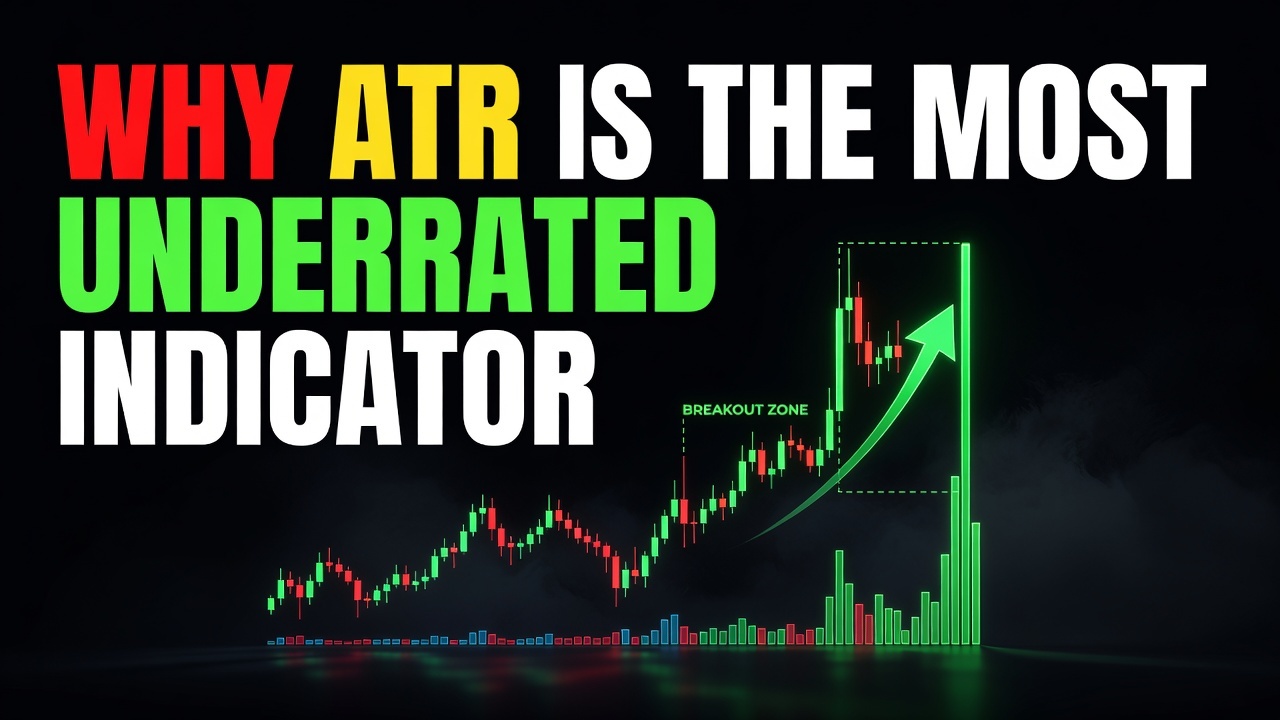
- ATR is the only indicator that directly protects your capital by tying your trade execution to actual market volatility instead of arbitrary chart levels.
- Setting fixed dollar or percentage stop losses ignores how much an asset naturally moves and practically guarantees you get shaken out by normal noise.
- Use a 1.5x to 2.0x ATR multiplier to set dynamic stops and size every position strictly around that volatility buffer.
— Ben, Find Better Trades
Retail traders waste hundreds of hours hunting for magical entry oscillators while completely ignoring how much the asset is actually moving right now. You do not have an entry problem; you have a volatility mismatch problem that ejects you from winning ideas before they even start. Average True Range is not designed to predict price direction, and that exact neutrality is why it is the most valuable tool on your chart.
Why Everyone Gets This Wrong
Most traders treat ATR like a broken momentum oscillator. They look at a rising ATR line, assume momentum is bullish, and buy right into the peak of a high-volatility distribution candle. ATR has zero directional bias, meaning a violent crash produces the exact same spike as a vertical short squeeze.
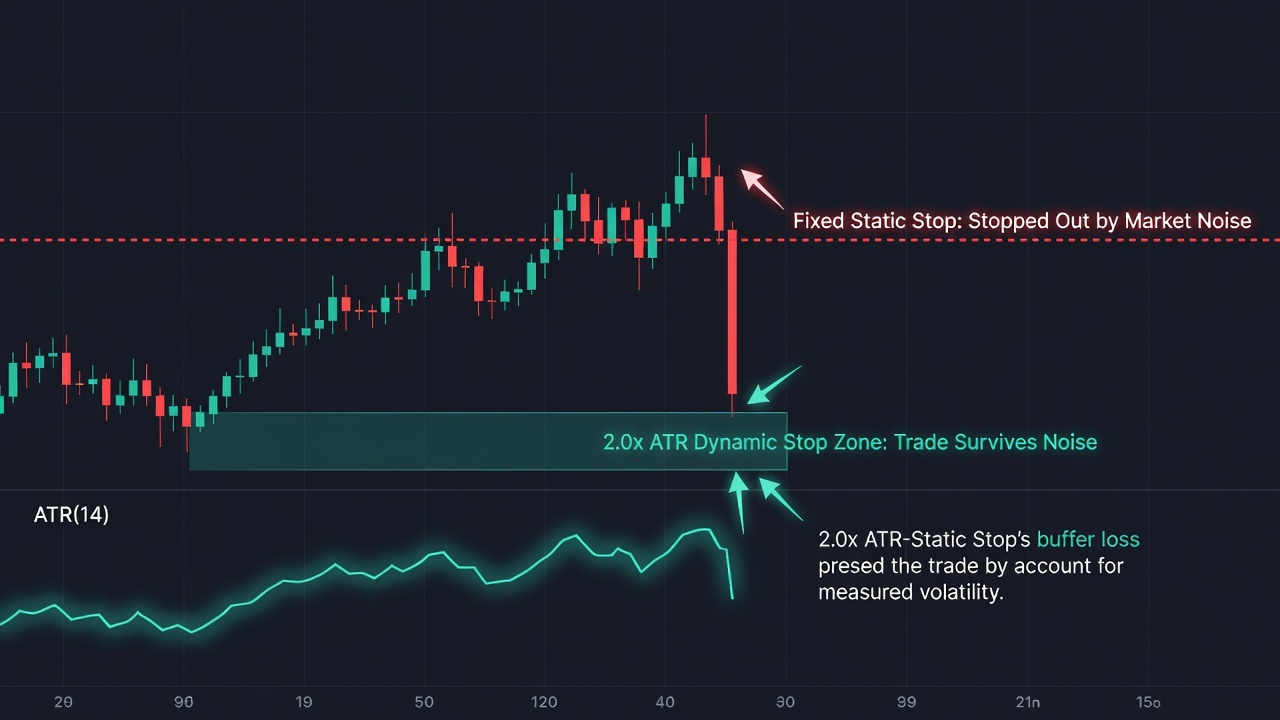
The catastrophic error happens when you pair dynamic markets with rigid, static stops. Let us say you enter a breakout trade and stick a rigid 15-pip or two-dollar stop right below your entry because that is what feels comfortable to your account size. If the 14-period ATR on that timeframe is sitting at four dollars, normal random variance inside a single bar will wipe out your position before the trend ever develops.
I constantly see traders complain about market makers hunting their stops just below a key breakout level. The truth is much simpler: your stop was sitting well inside the asset’s expected hourly noise threshold. You handed over your liquidity because you sized the trade around your personal account balance instead of the reality of current market volatility.
Ignoring ATR during volatility compression phases is just as destructive. When an asset consolidates and ATR dries up, placing a massive arbitrary stop exposes you to unnecessary dollar risk for a target that the current market regime cannot realistically deliver in an average session.
What Actually Works
You must use ATR to dictate your structural stop distance and reverse-engineer your position size before you ever click the buy button. Take the current 14-period ATR value, multiply it by 1.5 or 2.0, and place your stop that exact distance away from your entry or technical support level. This provides an objective buffer that forces the market to prove your thesis dead wrong before taking your money.
Once you have that volatility-based stop distance, you calculate your share or contract size to fit your fixed dollar risk. If your maximum risk is $500 per trade and your 2x ATR stop requires a five-dollar cushion, you trade exactly 100 shares. If volatility doubles and that same setup now requires a ten-dollar cushion, your sizing instantly drops to 50 shares.
This dynamic sizing framework completely removes emotional guesswork from volatile regimes. You stop blowing up when markets get chaotic because your position size automatically shrinks to absorb the larger swings without increasing your total dollar risk.
You can also trail winning positions using the ATR trailing stop method, often called a Chandelier Exit. As price prints new swing highs in a trending market, you drag your stop up at a constant distance of 2.5x ATR below the highest high, letting winners run while locking in profits as volatility naturally expands.
When ATR Can Still Help
ATR works exceptionally well as a daily exhaustion filter to keep you from chasing extended moves. If an instrument has an average daily range of four dollars and it has already rallied six dollars before lunchtime, buying a fresh breakout is a statistically low-probability trade because the session fuel is already spent.
It also flags imminent expansion periods when ATR drops to multi-week lows, signaling that a tight consolidation is coiling for an explosive directional move.
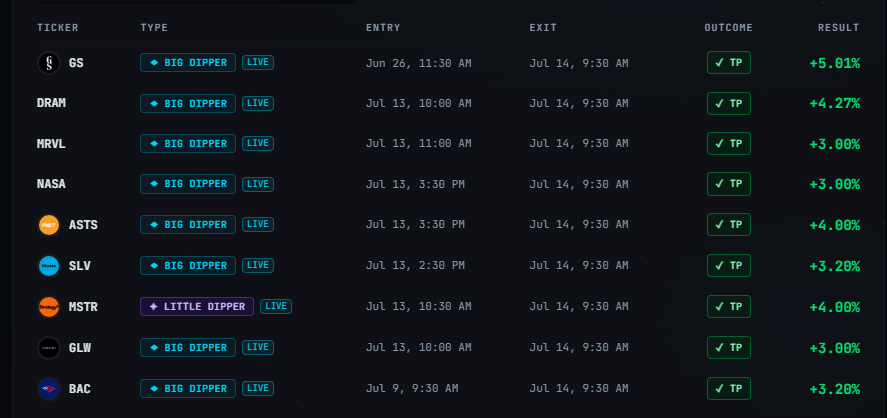
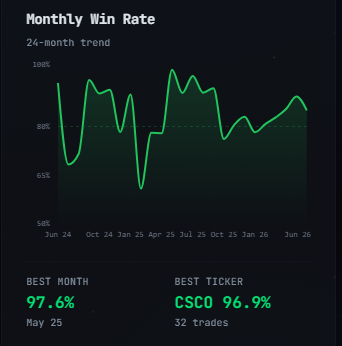
🎯 Want Setups Like These? The Big Dipper Does the Scanning For You.
Every morning the Big Dipper delivers curated DIP ZONE trade ideas — stocks already at high-probability entry levels, with targets pre-set. No guessing, no scanning. Just setups.
Frequently Asked Questions About ATR
Q: What is the best ATR multiplier for setting stop losses?
A: A 1.5x to 2.0x multiplier on a standard 14-period ATR offers the best balance between giving the trade room to breathe and keeping your risk parameters controlled.
Q: Can I use ATR as a standalone buy or sell signal?
A: No, ATR contains no directional information and must be paired with price action or structural support and resistance levels to determine trend direction.
Free For Traders
One Clear Arrow. Every High-Probability Setup. Free.
The Fusion Indicator combines multiple signals into a single buy/sell arrow on TradingView so you never miss a move.

From Find Better Trades
Only Trade When Momentum Is HEAVILY In Your Favor
The Power Index oscillator measures trend conviction at a glance — it filters out weak, choppy action so you only take the strong moves.

📈 Want More? Join Our Free Trading Community
- Trading Strategy Guides Telegram — daily strategy tips and market insights
- Find Better Trades Telegram — free trade signals delivered to your phone
- Find Better Trades on YouTube — live trade breakdowns and tutorials