Fed Hikes Rates Again: What It Means for Your Trades — September 21, 2026

⚡ What This Means for Traders — September 21, 2026
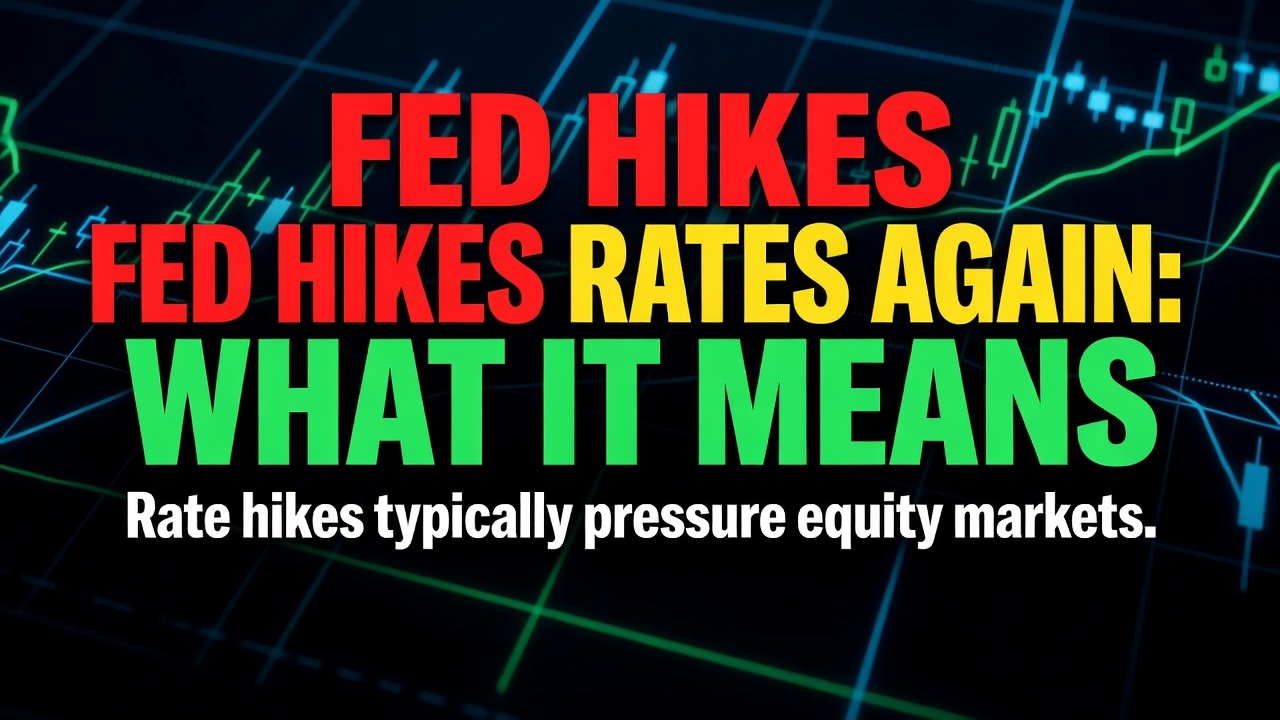
- The Federal Reserve just hit us with another rate hike, pushing the range to 3.75%-4.0%.
- Higher rates mean borrowing costs go up, pressuring growth stocks and making safe havens look a little better.
- I’m leaning bearish in the short term; prepare for volatility, especially in rate-sensitive sectors.
— Ben, Find Better Trades
They did it. Another quarter-percentage-point hike from the Fed, bringing the target range to 3.75%-4.0%.
This isn’t just some abstract number. It directly impacts every trade you make, starting right now. Get ready for some market churn.
What Just Happened
The Federal Reserve announced a quarter-percentage-point interest-rate hike today. This move pushes the federal funds rate to a range of 3.75%-4.0%.
This wasn’t a unanimous expectation, but the Fed’s message is clear: inflation control is their top priority. They’re not messing around.
The hike impacts everything from consumer loans to corporate borrowing. It’s a direct hit to the cost of money across the entire economy.
This decision underscores the Fed’s commitment to tightening monetary policy. They’ll keep going until they see inflation firmly under control.
The market’s immediate reaction might be choppy, but the long-term implications are what we need to watch. Don’t get caught flat-footed.
What It Means for Your Trades
Growth stocks, especially in the tech sector, are going to feel the pain. Their future earnings get discounted more heavily with higher interest rates, impacting valuations.
Companies that rely on cheap debt for expansion and operations will struggle. Their balance sheets just got tighter, making growth harder to fund.
Stay away from highly leveraged players; their debt servicing costs are climbing. Look for strong balance sheets and positive free cash flow.
Financials, particularly regional banks, might see a temporary boost from wider net interest margins. However, if the economy slows too much, loan defaults could become an issue.
Utilities and consumer staples, often seen as defensive plays, could gain some traction. Their stable earnings streams look more attractive when growth is scarce.
Consider sectors with pricing power that can pass on higher costs to consumers. Energy and materials might hold up better than others in this environment.
Small-cap companies often feel the pinch harder than large caps. They typically have less access to diverse funding and are more sensitive to borrowing costs.
My Take
I’m bearish in the immediate aftermath of this announcement. The market often overreacts initially, but the underlying pressure from higher rates is undeniably real.
Borrowing costs are up, and that impacts everything from corporate investments to consumer spending. This isn’t good for overall market sentiment or earnings.
We’ll likely see continued rotation out of high-growth, high-valuation names. Cash is king, and defensive positions are smart plays right now.
Look for opportunities to short overvalued stocks or consider inverse ETFs. Don’t fight the Fed; trade what’s happening, not what you wish was happening.
This isn’t a time for complacency. Protect your capital and adapt your strategy to a higher interest rate environment. Stay nimble.
Conviction: high
Macro Pulse FAQ
Q: How does this Fed hike affect my HELOC?
A: Your Home Equity Line of Credit (HELOC) will definitely see its interest rate increase. HELOCs are typically variable-rate, tied directly to the prime rate, which moves with the Fed’s target rate.
Q: Should I buy bonds now that rates are higher?
A: Higher rates make newly issued bonds more attractive, offering better yields to maturity. Existing bond prices might dip, but new issues are definitely worth a look for income-focused traders.
Q: What sectors are most vulnerable to rate hikes?
A: Sectors heavily reliant on borrowing, like real estate investment trusts (REITs) and highly speculative tech, are most vulnerable. Their business models struggle with expensive capital.
Q: Will the stock market crash after this?
A: A crash isn’t guaranteed, but significant volatility and downward pressure are highly probable. The market needs to digest these higher borrowing costs and their effect on corporate profits.
Q: Is it a bad time to take out a $50,000 HELOC with rates up?
A: Yes, it’s a worse time. Your $50,000 HELOC will have a higher variable interest rate immediately. That means higher monthly payments and more expensive debt overall.
Free For Traders
One Clear Arrow. Every High-Probability Setup. Free.
The Fusion Indicator combines multiple signals into a single buy/sell arrow on TradingView so you never miss a move.

From Find Better Trades
Green Light Means GO. It’s That Simple.
Clear signals for directional options plays — momentum plus chain data tells you exactly which strike to buy.

📈 Want More? Join Our Free Trading Community
- Trading Strategy Guides Telegram — daily strategy tips and market insights
- Find Better Trades Telegram — free trade signals delivered to your phone
- Find Better Trades on YouTube — live trade breakdowns and tutorials