What Is an Option? A Simple Beginner’s Guide

📚 Beginner’s Guide to Options — Part 1 of 51
- Part 1: What Is an Option? The Absolute Basics Explained (you are here)
☑ Key Takeaways
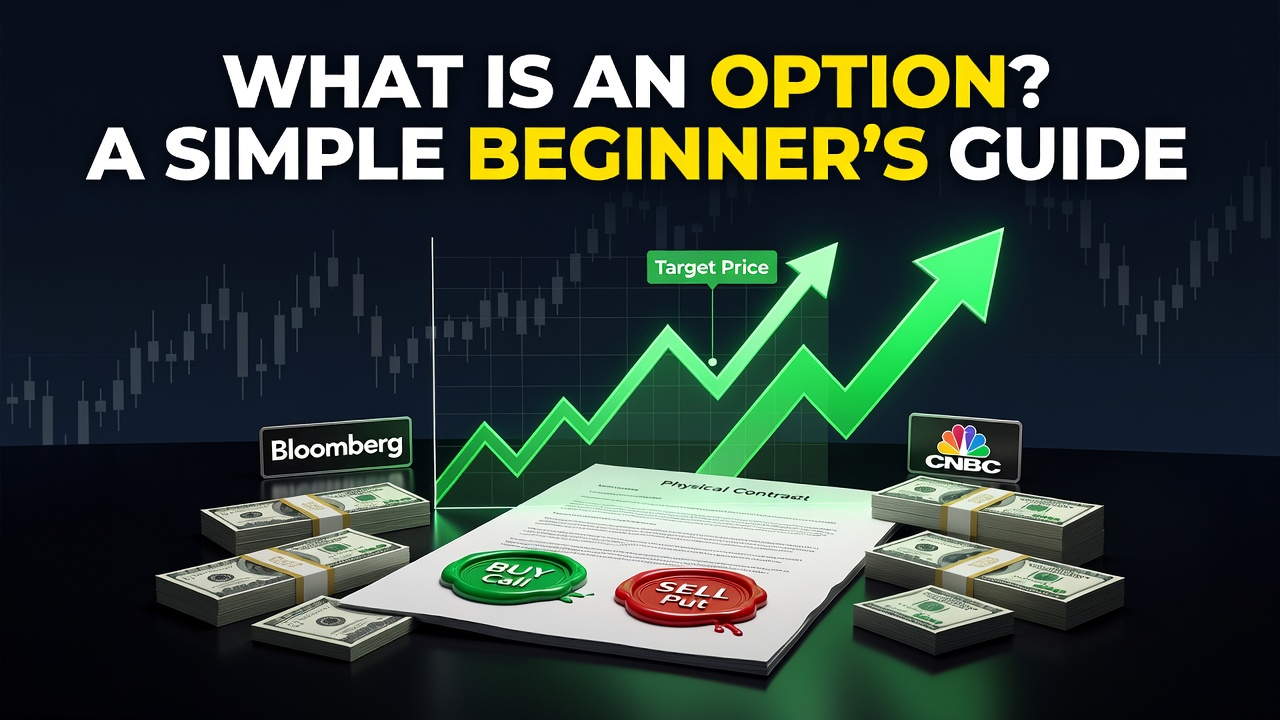
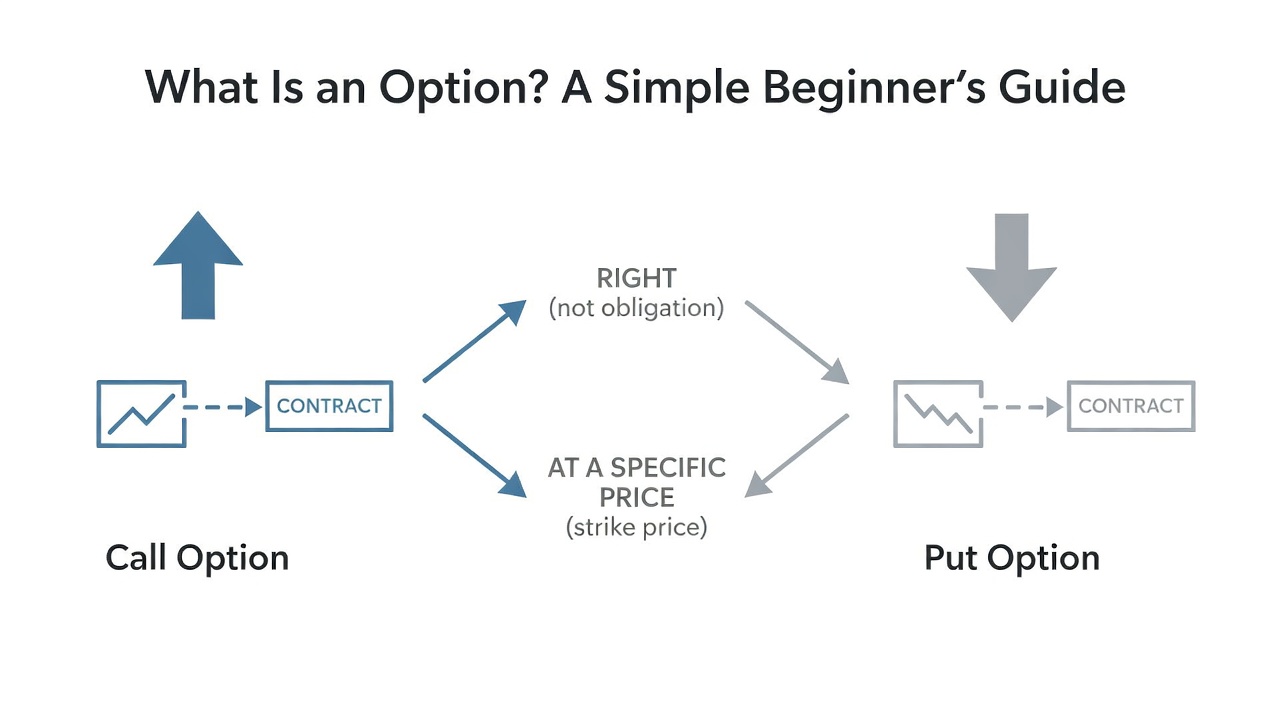
- An option is a contract that gives you the right, but not the obligation, to buy or sell a stock at a fixed price by a specific date.
- Unlike stocks, options have an expiration date, meaning they do not last forever and can expire completely worthless.
- Always treat options as tools for leverage and risk control, never as lottery tickets.
— Ben, Find Better Trades
When I first started trading, options looked like absolute gibberish. I saw rows of numbers, Greeks, and terms that made my head spin. This is Part 1 of my 51-part series, and my goal is to strip away all the confusion so you can understand this market from the ground up.
The Core Definition: What Actually Is an Option?
At its absolute most basic level, an option is a contract between two people. One person is the buyer, and the other person is the seller.
When you buy an option, you are buying a specific right to do something with a stock. You are not buying the actual stock itself, at least not yet.
This right has a strict expiration date attached to it. If you do not use that right before the expiration date, the contract simply vanishes into thin air.
The Real Estate Analogy: Why Options Exist
To understand how this works in the financial markets, let us look at a simple real-world analogy. Imagine you find a piece of land that you think will double in value because a new highway is being built next year.
The land is currently worth $100,000, but you do not have that kind of cash lying around today. Instead, you offer the owner $5,000 cash right now to hold the land for you for one year at that $100,000 price.
The owner agrees and pockets your $5,000. You now hold a contract giving you the right to buy that land for $100,000 anytime over the next twelve months.
🎯 Get High-Probability Trade Setups — Free
The Big Dipper Dashboard delivers curated trade ideas straight to your screen every morning. Know what to watch before the opening bell.

How the Land Deal Plays Out
If the highway gets approved and the land value jumps to $200,000, you have struck gold. You can use your contract to buy the land for the agreed $100,000, then immediately sell it for $200,000.
Your net profit is $95,000, which is the $100,000 gain minus your initial $5,000 contract fee. This shows how a small amount of money can control a much larger asset.
But what if the highway project is canceled, and the land value drops to $50,000? You simply walk away from the contract, and your only loss is the $5,000 you paid up front.

The Key Terms You Must Memorize
Now let us translate that real estate deal into the stock market. We need to define the four core terms you will see on your trading screen every single day.
The first term is the Underlying Asset, which is the stock that the option contract is based on. If you are trading options on Apple, then Apple stock is your underlying asset.
The second term is the Strike Price, which is the pre-agreed price where you can buy or sell the stock. In our land example, the strike price was $100,000.
The third term is the Expiration Date, which is the exact day the contract becomes invalid. After this date, the option contract is completely dead and has no value.
The fourth term is the Premium, which is the cash price you pay to buy the option contract. In our analogy, the $5,000 you paid to the landowner was the premium.
A Real Stock Market Example
Let us look at how this works with a fictional stock we will call XYZ, which is currently trading at $50 per share. You believe the company is about to release a massive product update that will push the stock price up.
Instead of spending $5,000 to buy 100 shares of XYZ stock, you decide to buy an option contract instead. You choose an option with a Strike Price of $50 that expires in one month, and you pay a Premium of $2 per share.
Because every standard stock option contract represents 100 shares of stock, you must multiply the premium by 100. This means your total upfront cost for this contract is exactly $200.
| Scenario at Expiration | XYZ Stock Price | Option Contract Value | Your Total Net Profit/Loss |
|---|---|---|---|
| Best Case | $65.00 | $1,500.00 | +$1,300.00 Profit |
| Flat Case | $50.00 | $0.00 | -$200.00 Loss |
| Worst Case | $35.00 | $0.00 | -$200.00 Loss |
If XYZ stock skyrockets to $65 at expiration, your contract gives you the right to buy those shares at $50. Your contract is now worth $15 per share, making your $200 investment worth $1,500.
If the stock stays at $50 or drops to $35, you simply let the option expire. Your contract becomes worthless, and you lose exactly the $200 premium you paid, with zero further obligation.
Common Mistakes Beginners Make With This
The single biggest mistake I see beginners make is treating options like lottery tickets. They buy cheap contracts that are far away from the current stock price, hoping for a miracle.
Another common trap is forgetting about the expiration date entirely. Unlike stocks, which you can hold forever hoping they recover, options will eventually expire and can leave you with a total loss.
Lastly, beginners often fail to understand that options are priced per share. When you see a premium listed as $1.50, you are actually paying $150 to enter that trade.
What Is an Option FAQ
Why would someone buy an option instead of just buying the stock?
Options require much less upfront cash to control the same amount of shares. This allows you to risk a small amount of capital to get exposure to large stock movements.
Can I lose more money than I invest when buying an option?
No, when you are strictly buying options, your risk is strictly limited to the premium you paid to enter the trade. Your account can never go negative from buying a basic option contract.
What happens if I hold an option all the way until it expires?
If the option is profitable, it will usually be automatically exercised for you, meaning you will buy or sell the shares. If it is not profitable, it simply expires worthless and disappears from your account.
In the next part of this series, we will break down the two specific flavors of contracts you can trade: Calls vs. Puts.
📈 Want More? Join Our Free Trading Community
- Trading Strategy Guides Telegram — daily strategy tips and market insights
- Find Better Trades Telegram — free trade signals delivered to your phone
- Find Better Trades on YouTube — live trade breakdowns and tutorials
Lesson 1 of 55 in the free Options Trading Course.
Next: Calls vs Puts: The Two Types of Options Explained Simply →