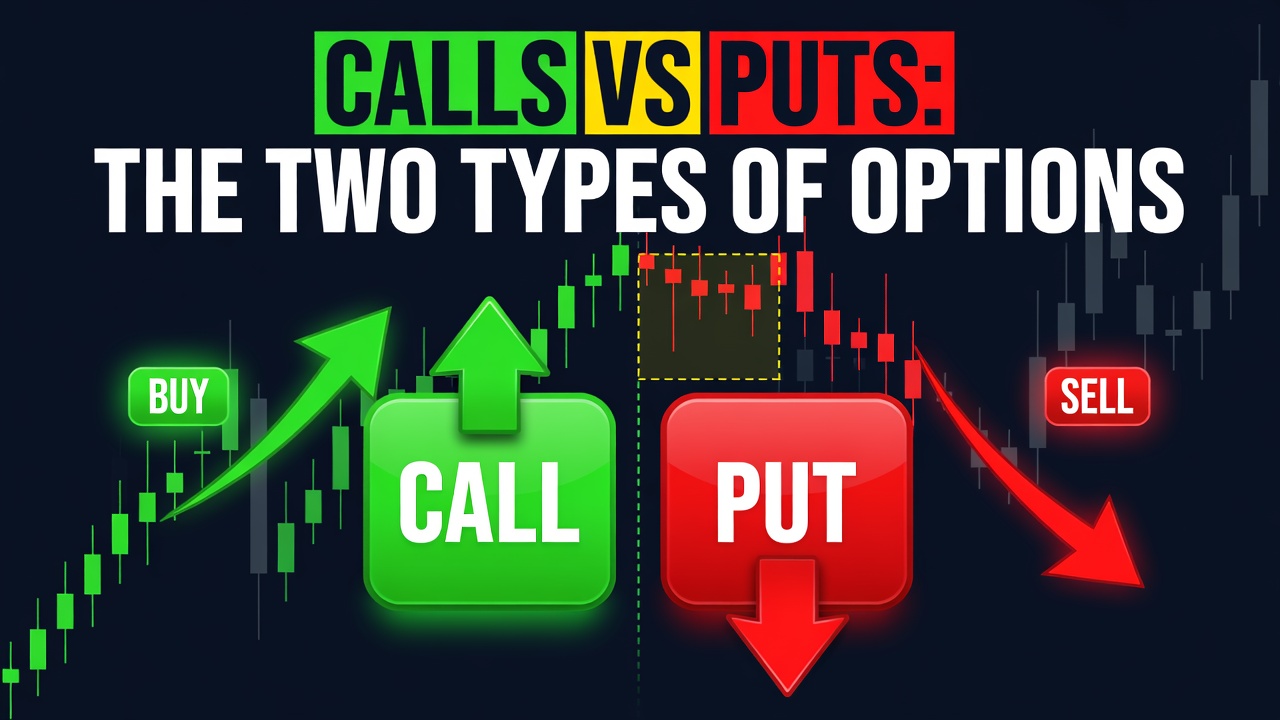
Calls vs Puts: The Two Types of Options Explained simply

📚 Beginner’s Guide to Options — Part 2 of 51
- Part 1: What Is an Option? The Absolute Basics Explained
- Part 2: Calls vs. Puts: The Two Types of Options You Need to Know (you are here)
☑ Key Takeaways
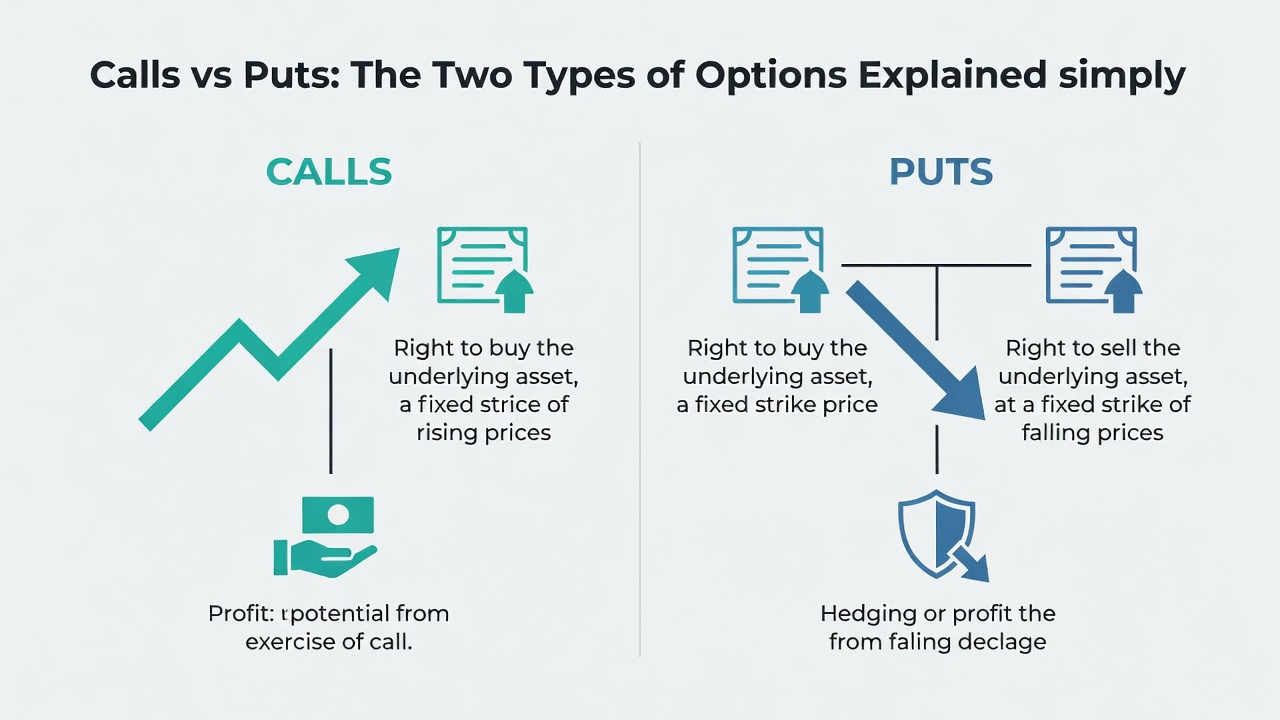
- A call option gives you the right to buy a stock, while a put option gives you the right to sell a stock.
- Buyers of options pay a fee for rights, while sellers collect that fee and take on obligations.
- Choose calls when you expect a stock to rise, and use puts when you expect a stock to fall.
— Ben, Find Better Trades
When I was starting out, I remember looking at an options chain and feeling completely overwhelmed by all the numbers. It felt like trying to learn a foreign language overnight, but I promise you it is much simpler than it looks. In this second part of our fifty-one part beginner series, we are going to break down the two absolute pillars of the options market: calls and puts.
If you do not grasp these two concepts, nothing else in the trading world will make sense. We covered the very bare-bones definition of what an option is in Part 1 of this series, so we know these are just contracts. Now, we are going to look at the only two types of contracts you will ever trade. Let us make sense of how they work, how they differ, and how you can actually use them in your account.
Understanding the Call Option: The Right to Buy
A call option is a contract that gives you the right to buy a specific stock at a set price within a specific timeframe. I like to think of a call option as a coupon for a stock. If you hold a coupon that lets you buy a grocery item for three dollars, you do not care if the store raises the price to ten dollars because your coupon guarantees your three-dollar price. That is exactly what a call option does for a stock like Apple or Tesla.
When you buy a call option, you are paying a fee called a premium to get this right. This premium is a non-refundable payment that goes directly to the person selling you the option. In exchange, they are legally bound to sell you the stock at your set price, no matter how high the stock price climbs. If the stock price goes to the moon, you still get to buy it at your cheap, locked-in price.
Let us look at a simple real-world analogy to make this crystal clear. Imagine you want to buy a house in six months, and the seller agrees to lock in a price of three hundred thousand dollars today. You pay them a five thousand dollar deposit to hold that price for you. If the neighborhood suddenly becomes incredibly popular and the house value jumps to four hundred thousand dollars, you still get to buy it for three hundred thousand.
Of course, you do not have to buy the house if the neighborhood goes downhill and the home value drops to two hundred thousand dollars. In that case, you just walk away from the deal and let your deposit go. This is exactly how buying a call option works in the stock market. You have all the upside potential if the stock rises, but your risk is strictly limited to the premium you paid if the stock falls.
The Anatomy of a Call Option Trade
Let us look at a real numeric example using a hypothetical stock we will call XYZ. Let us say XYZ stock is currently trading at fifty dollars per share, and you think the company is about to release a massive new product. You decide to buy a fifty-five dollar call option that expires in one month, and you pay a premium of two dollars per share to buy it.
Because every standard stock option contract represents exactly one hundred shares, you must multiply all option prices by one hundred. This means your total cash outlay for this single contract is exactly two hundred dollars. This two hundred dollars is the absolute maximum amount of money you can lose on this trade, no matter what happens to XYZ.
Now let us say your prediction was correct, and XYZ stock surges to seventy dollars by the end of the month. Because you hold the fifty-five dollar call option, you have the right to buy one hundred shares of XYZ for fifty-five dollars. You can immediately turn around and sell those shares on the open market for seventy dollars, pocketing a massive profit.
Your gross profit on the stock would be fifteen dollars per share, which is the seventy-dollar market price minus your fifty-five dollar buy price. After subtracting the two-dollar premium you paid to enter the trade, your net profit is thirteen dollars per share, or thirteen hundred dollars total. This shows how call options can turn a relatively small investment into a very large gain.
🎯 Get High-Probability Trade Setups — Free
The Big Dipper Dashboard delivers curated trade ideas straight to your screen every morning. Know what to watch before the opening bell.

Understanding the Put Option: The Right to Sell
Now let us look at the other side of the coin. A put option is a contract that gives you the right to sell a specific stock at a set price within a specific timeframe. While a call option is a tool for buyers, I think of a put option as an insurance policy for your stocks. It is a way to protect yourself from a market crash or to profit when a stock price goes down.
When you buy a put option, you are paying a premium to someone who agrees to buy your stock at a set price, even if the stock market crashes to zero. If you own a stock at one hundred dollars and buy a ninety-dollar put option, you have guaranteed that you can sell your stock for ninety dollars. It does not matter if the company goes completely bankrupt; your selling price is locked in.
Think about car insurance as an analogy. You pay a monthly premium to your insurance company so that if you wreck your car, they will write you a check for the value of the car. If you do not get into an accident, your insurance premium is gone forever, but you had peace of mind. Buying a put option works the exact same way for your stock portfolio.
You can also buy put options even if you do not own the underlying stock. This is a way to bet against a company and profit directly from its decline. If the stock price falls below your set price, the value of your put option contract goes up, allowing you to sell the contract for a profit without ever owning the actual stock.

The Anatomy of a Put Option Trade
Let us walk through a numeric example for a put option using our hypothetical stock XYZ. Let us say XYZ is currently trading at one hundred dollars, and you believe the company is about to report terrible quarterly earnings. You buy a ninety-five dollar put option contract that expires in two weeks, paying a premium of three dollars per share.
Just like before, we multiply this price by one hundred, so your total investment and maximum risk is three hundred dollars. Now, let us say the earnings report is a disaster, and XYZ stock plunges down to eighty dollars per share. Your ninety-five dollar put option gives you the right to sell shares of XYZ for ninety-five dollars.
If you do not own the stock, you can buy one hundred shares on the open market right now for eighty dollars. Then, you use your put option to immediately sell those same shares for ninety-five dollars. This transaction nets you a gross profit of fifteen dollars per share, which is the ninety-five dollar selling price minus your eighty-dollar buying price.
To find your net profit, you subtract the three-dollar premium you paid at the beginning. This leaves you with a net profit of twelve dollars per share, which translates to twelve hundred dollars on your single contract. If the stock had stayed above ninety-five dollars, you simply would have let the option expire worthless, losing only your three hundred dollar premium.
Buyers vs. Sellers: The Two Sides of Every Contract
Every single options transaction requires two parties: a buyer and a seller. We call the buyer the “holder” of the option, and we call the seller the “writer” of the option. It is vital to understand that these two parties have completely opposite rights, obligations, and financial goals. The buyer is buying a right, while the seller is taking on an obligation.
The option buyer pays the premium and gets to decide whether or not to exercise the contract. They have unlimited profit potential with strictly limited risk. The option seller, on the other hand, collects the premium upfront but is forced to fulfill the contract if the buyer wants to exercise it. The seller has limited profit potential but massive financial risk.
You might wonder why anyone would ever want to sell an option if they have limited profit and high risk. The answer is that most options expire completely worthless. Sellers act like insurance companies, collecting small premiums from many different buyers day after day, betting that the stock will not make a massive move.
Here is a simple table to help you visualize how these different roles compare to one another:
| Role | Action | Obligation/Right | Risk Profile | Market View |
|---|---|---|---|---|
| Call Buyer | Pays Premium | Right to BUY stock | Limited to Premium | Bullish (Expects Rise) |
| Call Seller | Collects Premium | Obligated to SELL stock | Unlimited Risk | Bearish/Neutral |
| Put Buyer | Pays Premium | Right to SELL stock | Limited to Premium | Bearish (Expects Fall) |
| Put Seller | Collects Premium | Obligated to BUY stock | Significant Risk | Bullish/Neutral |

How to Choose Between Calls and Puts
Choosing whether to use a call or a put comes down to your outlook on the stock and your overall trading strategy. If you think a stock is going to go up, you want to focus on calls. You can either buy a call to profit from the upward move, or you can sell a put to collect income while waiting for the stock to stay steady or rise.
If you think a stock is going to go down, you want to focus on puts. You can buy a put to make money as the price falls, or you can sell a call if you think the stock will stay below a certain price. The beauty of options is that they give you the flexibility to make money in any market environment, not just when stocks are going up.
I always tell my traders to start by asking themselves one simple question before looking at any option chains. Do I want to buy or sell this underlying stock, and which direction do I think it is headed next? Once you have a clear directional thesis, choosing the right type of contract becomes a very straightforward process.
Common Mistakes Beginners Make With This
The most common mistake I see beginners make is buying cheap, out-of-the-money calls or puts because they look like a bargain. They see an option trading for five cents and buy a hundred contracts, not realizing the stock has virtually zero chance of reaching that price before expiration. These cheap options almost always expire worthless, meaning you are just handing your hard-earned money over to the option sellers.
Another frequent error is confusing the rights of a buyer with the obligations of a seller. Beginners will sometimes sell an option to collect a quick premium, not realizing they have legally obligated themselves to buy or sell hundreds of shares of stock if the trade goes against them. This can lead to catastrophic losses that far exceed the small premium they collected at the start of the trade.
Finally, many new traders do not factor the passage of time into their trades. Unlike stocks, which you can hold forever, options have an expiration date that acts like a ticking clock. Even if you guess the correct direction of the stock, you will still lose money if the move does not happen fast enough to beat the daily decay of the option’s value.
Your Frequently Asked Questions About Calls and Puts
What happens if I hold an option until the expiration date?
If your option is in the money at expiration, it will automatically be exercised, meaning you will buy or sell the underlying stock. If the option is out of the money, it will simply expire worthless, disappear from your account, and your initial premium will be lost. Most retail traders choose to sell their options before expiration to avoid the hassle of dealing with the actual stock shares.
Can I sell an option contract before the expiration date?
Yes, you can buy or sell your option contracts at any time during market hours before the expiration date arrives. You do not have to hold an option until expiration to lock in a profit or cut a loss. In fact, the vast majority of options traders close out their positions early by trading them back into the market.
Do I need to own one hundred shares of stock to buy a put option?
No, you do not need to own any shares of the underlying stock to buy a put option contract. When you buy a put without owning the stock, it is called a “speculative put,” and it allows you to profit purely from the downward price movement. If the stock drops, you can simply sell the put contract itself back to the market for a higher price than you paid.
Which option type is safer for a complete beginner to trade?
Buying calls or buying puts is significantly safer for beginners than selling them because your risk is strictly limited to the premium you pay upfront. When you buy an option, you can never lose more than the cost of the contract, meaning you can never wake up to an unexpected margin call. Selling options carries much higher risk and should be avoided until you have gained significant experience in the markets.
In the next part of our series, we are going to demystify the single most important number on your screen by looking at the strike price and what it actually means for your trades.
📈 Want More? Join Our Free Trading Community
- Trading Strategy Guides Telegram — daily strategy tips and market insights
- Find Better Trades Telegram — free trade signals delivered to your phone
- Find Better Trades on YouTube — live trade breakdowns and tutorials