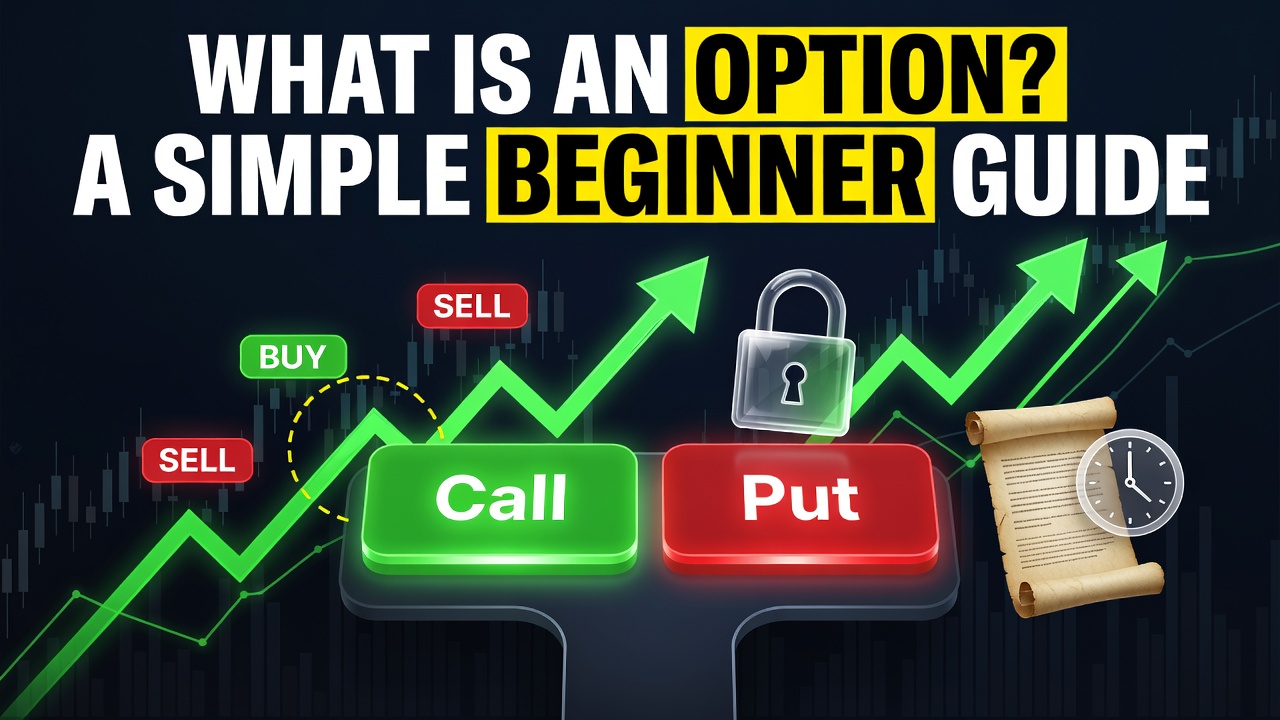
What Is an Option? A Simple Beginner Guide

📚 Beginner’s Guide to Options — Part 1 of 51
- Part 1: What Is an Option? The Absolute Basics Explained (you are here)
⚡ Key Takeaways
- An option is a financial contract that gives you the right, but not the obligation, to buy or sell a stock at a set price.
- Unlike buying shares of stock directly, options have an expiration date and decay in value over time.
- Always treat options as strategic tools for leverage or protection rather than speculative lottery tickets.
— Ben, Find Better Trades
When I first started trading, I thought options were some highly classified secret reserved for hedge fund math geniuses. It turns out that once you strip away the confusing wall street jargon, the core concept is incredibly straightforward. This is Part 1 of my 51-part series where we are going to build your trading foundation from the absolute ground up.
My goal with this guide is to explain options so clearly that you could explain them to your teenager or your neighbor by dinner time. We are going to go slow, use real-world analogies, and make sure you do not get overwhelmed by complex formulas.
The Simple Definition of an Option
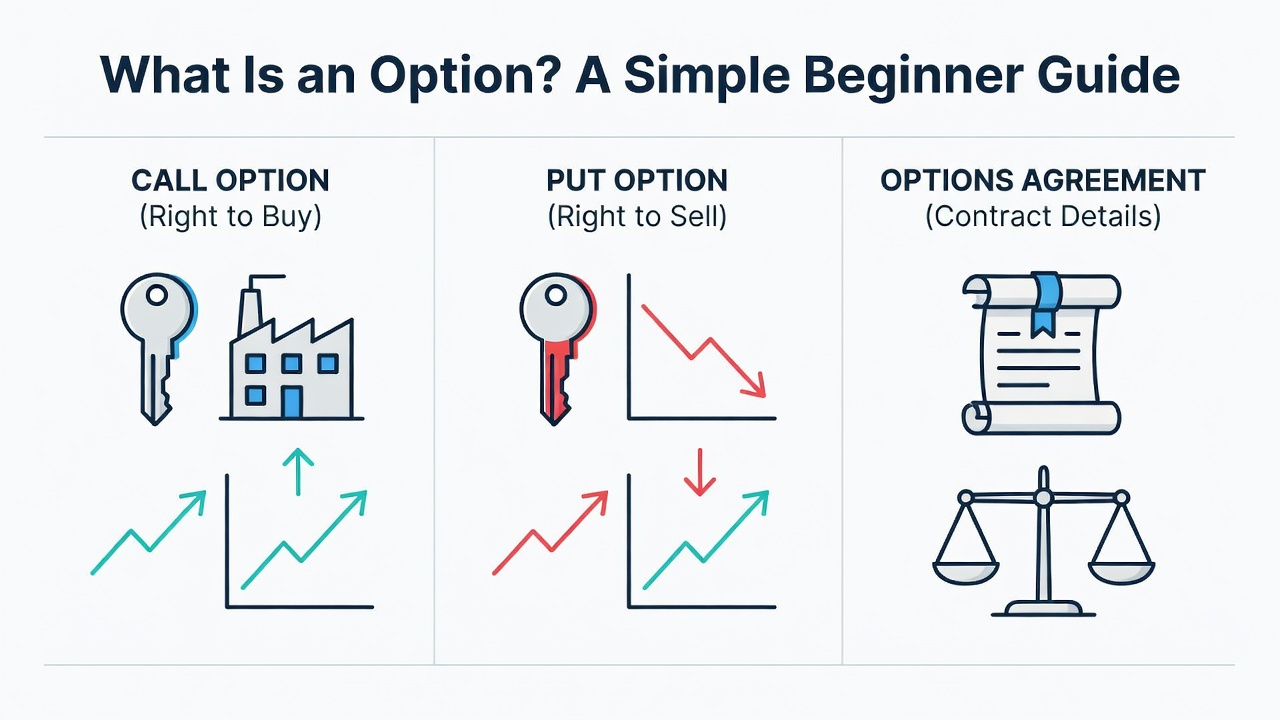
At its absolute core, an option is a contract between two parties tied to the price of an underlying asset, like a stock. When you buy an option, you are paying for a choice, not the actual asset itself.
This contract gives you the legal right to either buy or sell a specific stock at a predetermined price within a specific timeframe. You are not forced to make the transaction happen, which is why it is called an option rather than an obligation.
To make this happen, you pay a fee to the person selling you the contract. If the trade does not go your way, you can simply let the contract expire worthless, losing only the fee you paid upfront.
This is fundamentally different from buying a stock directly. When you buy shares, you own a piece of the company forever until you decide to sell it, whereas options always come with a strict ticking clock.
The Real-World Analogy: Real Estate Deposits
The easiest way to understand this is to forget about the stock market for a second and think about buying a house. Let us say you find a beautiful home worth $300,000, but you need three months to organize your bank loans.
You go to the seller and offer them $5,000 cash right now to sign an agreement. This agreement gives you the exclusive right to buy the house for $300,000 anytime within the next ninety days.
The seller agrees and pockets your $5,000 cash deposit. Now you have a contract in hand, and the seller cannot sell the house to anyone else during those ninety days, even if someone else offers more money.
If you find out a month later that the local school district is shutting down and house values in the area crash, you can choose to walk away. You lose your $5,000 deposit, but you are not forced to buy a declining house.
On the flip side, if a new luxury shopping center is announced next door and the home value instantly jumps to $400,000, you still have the right to buy it for $300,000. You exercise your contract, buy the home at the discount, and instantly capture $100,000 in value minus your $5,000 fee.
🎯 Get High-Probability Trade Setups — Free
The Big Dipper Dashboard delivers curated trade ideas straight to your screen every morning. Know what to watch before the opening bell.

The Key Components of Every Option Contract
Every single options contract in the stock market has four basic pieces of information that never change. If you can read these four details, you can understand any option on your screen.
First is the underlying asset, which is simply the specific stock or exchange-traded fund that the contract is tied to. If you are trading Apple options, then Apple stock is your underlying asset.
Second is the strike price, which is the pre-agreed price at which you have the right to buy or sell the stock. Think of this as your line in the sand that determines whether your contract is valuable or worthless.
Third is the expiration date, which is the exact day and time the contract becomes completely void and useless. Options are wasting assets, meaning their lifespan is limited and they eventually disappear.
Fourth is the premium, which is the cash price you pay to buy the contract, or the money you collect if you are the one selling it. This premium fluctuates every second the market is open based on how the stock is moving.

How Options Contracts Differ from Shares
To really grasp how these instruments work, we need to compare them directly to owning regular stock shares. They behave very differently under the hood, especially when it comes to risk and reward profiles.
When you own one hundred shares of stock, your financial risk is tied directly to the stock price going all the way to zero. With options, your maximum loss as a buyer is strictly limited to the premium you paid to open the trade.
Another major difference is leverage, which allows you to control a large amount of stock for a fraction of the cost. One standard stock option contract always controls exactly one hundred shares of the underlying stock.
Let us look at a quick comparison table to see how these two assets match up against each other side by side:
| Feature | Buying Shares | Buying Options |
|---|---|---|
| Upfront Cost | High (Full price of shares) | Low (Premium only) |
| Expiration | Never (Hold as long as you want) | Fixed expiration date |
| Maximum Loss | Full value of the shares | Limited to the premium paid |
| Contract Size | Any number of shares | Blocks of 100 shares |
As you can see, options offer a high-leverage alternative to buying stock directly, but they require you to be correct about the direction and the timing of the move.
A Real-World Trading Example: The Upside Move
Let us run through a concrete numeric example to show you how this works in practice with a hypothetical stock we will call XYZ. Imagine XYZ is currently trading at $100 per share, and you believe the price is going to rise soon.
Instead of spending $10,000 to buy one hundred shares of stock, you decide to buy a single option contract instead. You buy an option with a strike price of $100 that expires in thirty days, paying a premium of $3 per share.
Because one contract controls one hundred shares, your total cash outlay for this trade is $300 ($3 multiplied by 100 shares). This $300 is the absolute maximum amount of money you can lose on this trade.
Now let us say you are right, and two weeks later XYZ stock shoots up to $120 per share. Your option contract gives you the right to buy those shares at $100, meaning your contract is now highly valuable.
You can choose to buy the shares at $100 and immediately sell them for $120, pocketing a massive profit. Alternatively, you can simply sell the option contract itself back to the market for a much higher premium than the $3 you paid.
The Concept of Premium and Time Decay
To succeed at this game, you must understand that option premiums are made of two parts: intrinsic value and extrinsic value. Intrinsic value is the actual, real-world value of the option if you exercised it right this second.
Extrinsic value, which is often called time value, is the extra premium built into the contract based on how much time is left before expiration. The more time on the clock, the more chances the stock has to make a big move.
As every day passes, the likelihood of a massive price swing decreases, causing the time value of the option to shrink. This natural erosion of the premium over time is a process called time decay.
If you buy an option and the stock price does not move at all, your contract will lose value every single day. This is why buying options is often compared to holding a melting ice cube in your hands.
Understanding this ticking clock is crucial because it means you cannot just be right about where a stock is going. You also have to be right about when it is going to get there, which adds an extra layer of difficulty.
Why Traders Use Options Instead of Stocks
You might be wondering why anyone bothers with these complex contracts if they expire and decay every day. The answer lies in the immense flexibility and strategic advantages they offer over traditional stock trading.
First, options allow you to trade with limited risk while maintaining high leverage. You can participate in the upward move of an expensive stock without tying up thousands of dollars of your hard-earned trading capital.
Second, options allow you to make money in any market environment, whether the market is going up, going down, or staying completely flat. You can design specific strategies that profit when stock prices stall out and do nothing.
Third, they can be used as a form of portfolio insurance to protect your existing stock positions. Just like you pay insurance premiums on your car, you can use options to protect your stock account from a sudden market crash.
Ultimately, options are tools that give you more choices, better risk management, and the ability to express highly specific views on the market.
Common Mistakes Beginners Make With This
The most common mistake I see beginners make is treating options like lottery tickets by buying cheap contracts that expire in two days. They see a low premium and think it is a bargain, not realizing that the probability of that contract expiring worthless is incredibly high.
Another frequent error is failing to account for the devastating effects of time decay on their long positions. They buy a contract, watch the stock move slightly in their favor over two weeks, and are shocked to find their option has actually lost value.
Lastly, many new traders do not understand that one option contract represents one hundred shares of stock. They buy ten contracts thinking they are taking a small risk, only to realize they are controlling a massive position size that their account cannot handle.
What Is an Option FAQ
Why would I buy an option instead of just buying the stock?
Buying an option requires significantly less upfront capital than buying the actual stock shares outright. It allows you to control the same one hundred shares with limited risk, meaning you can never lose more than the small premium you paid to enter the trade.
Can I lose more money than I invest when buying options?
When you are strictly buying options, your risk is absolutely limited to the premium you paid to buy the contract. You can never lose more than your initial investment, unlike other advanced trading strategies where risk can technically be unlimited.
What happens if I hold an option all the way until it expires?
If your option is unprofitable at the exact moment of expiration, it simply becomes completely worthless and disappears from your trading account. If the option is profitable, your broker will typically exercise it automatically, buying or selling the shares on your behalf.
Do I have to buy or sell the actual shares if I trade options?
No, you do not have to trade the actual shares of stock to make a profit with options. The vast majority of retail traders simply sell their option contracts back to the market before expiration to lock in their gains or cut their losses.
Now that you know what an option is, we need to look at the two tools you will use to trade them, which is exactly what we will cover in the next part of this series when we break down calls and puts.
📈 Want More? Join Our Free Trading Community
- Trading Strategy Guides Telegram — daily strategy tips and market insights
- Find Better Trades Telegram — free trade signals delivered to your phone
- Find Better Trades on YouTube — live trade breakdowns and tutorials